

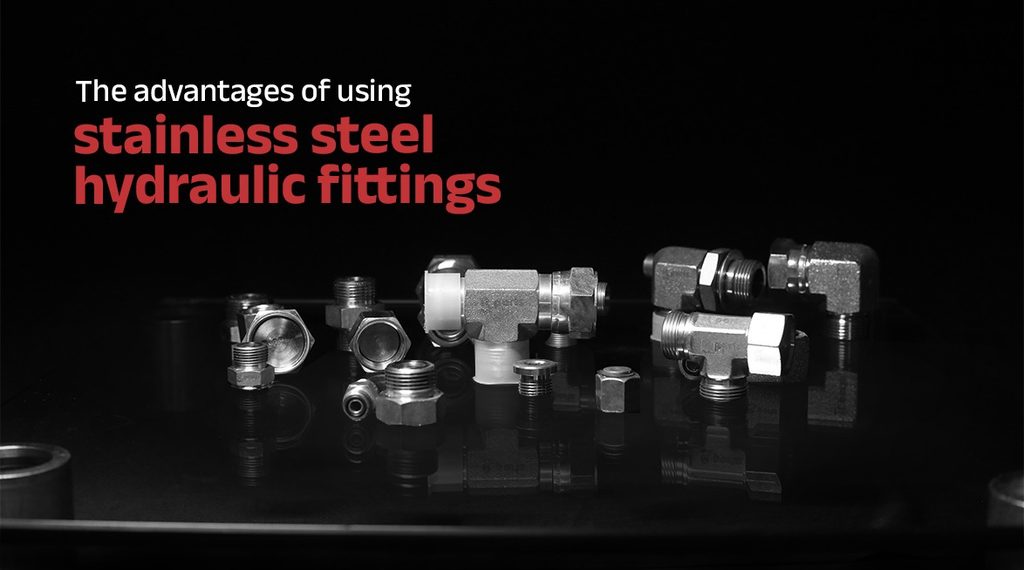
Stainless steel hydraulic fittings combine corrosion resistance, high strength, and long life, making them a smart choice for demanding hydraulic systems in industrial and harsh environments. For hose fittings manufacturers in India and hose fittings suppliers in India, they offer a strong technical and economic advantage over carbon steel or brass hardware.
Why Stainless Steel Hydraulic Fittings Stand Out
Stainless steel hydraulic fittings are engineered for systems that operate under high pressure, extreme temperatures, and aggressive media. They use alloy compositions rich in chromium, nickel, and often molybdenum, which gives them strength and corrosion resistance in conditions that quickly damage ordinary fittings.
Unlike basic carbon steel fittings, stainless steel versions maintain structural integrity even when exposed to moisture, salt spray, and industrial chemicals, helping prevent sudden failures in critical hydraulic circuits.
Key Performance Benefits
Rust and Corrosion Defense
Stainless steel develops a natural passive chromium oxide layer on its surface, which protects the metal from rust, pitting, and scaling. If the surface is scratched or nicked, the chromium reacts with oxygen to “self‑heal” this protective layer, maintaining corrosion resistance over time.
This makes stainless steel fittings ideal for marine, offshore, coastal, food processing, and chemical plants where water, salt, and aggressive chemicals are part of daily operation.
High‑Pressure Integrity
Stainless steel hydraulic fittings provide high tensile strength and fatigue resistance, allowing them to handle extreme pressures, often in the 10,000 psi range and above in properly designed systems. They resist cracking and deformation under dynamic pulsation, mechanical shock, and heavy vibration, which are common in hydraulic presses, heavy construction equipment, and industrial machinery.
This integrity is especially valuable for high‑pressure applications where hose assemblies and fittings are subjected to repeated pressure cycles and impulse loads.
Extreme Temperature Range
Stainless steel retains its strength and toughness at both very low and very high temperatures, making it suitable for cryogenic applications and high‑heat zones. Many industrial stainless grades continue to perform reliably at temperatures that can reach and exceed 500–600°C, where carbon steels would lose strength or scale rapidly.
Such temperature performance is crucial in sectors like power generation, petrochemicals, and process industries where thermal cycling is severe.
Fluid Compatibility
Stainless steel hydraulic fittings are compatible with a wide range of fluids, including petroleum‑based oils, synthetic hydraulic fluids, and many corrosive industrial media. Their resistance to acids, chlorides, and other aggressive chemicals makes them reliable in systems where media composition can harm traditional fittings over time.
For hose fittings manufacturers in India and hose fittings suppliers in India working with diversified customer industries, oil and gas, chemical, marine, food and beverage; this broad compatibility simplifies product selection.
Economic and Lifecycle Value
Low Maintenance Requirements
Stainless steel fittings generally do not require special coatings, paints, or frequent surface treatments to maintain their appearance and performance. Their self‑healing oxide layer reduces the need for harsh cleaning chemicals and aggressive maintenance routines, which lowers operating costs.
Because they are easier to keep clean and hygienic, stainless fittings are also favored in food, beverage, and pharmaceutical applications where frequent wash‑downs are standard.
Reduced Downtime and Failures
By resisting corrosion, cracking, and thread damage, stainless steel hydraulic fittings help prevent premature joint failures and leaks. That directly reduces unplanned downtime, emergency repairs, and the risk of contamination or environmental incidents from hydraulic fluid spills.
In systems with critical uptime requirements, like continuous process lines or offshore platforms, this increased reliability can be a key part of risk management.
Long‑Term Savings and Total Cost of Ownership
Although stainless steel fittings often have a higher upfront cost than comparable carbon steel or brass parts, they deliver better total cost of ownership over decades.
Lower replacement frequency, fewer failures, reduced maintenance, and extended service life translate into measurable lifecycle savings.
For hose fittings manufacturers in India and hose fittings suppliers in India, offering stainless steel options allows customers to balance initial budgets with long‑term operational economics, particularly in corrosive and high‑duty environments.
Where Stainless Steel Hydraulic Fittings Are Used
Stainless steel hydraulic fittings are widely used wherever fluid power systems face corrosive or extreme conditions:
- Marine and offshore:
winches, steering systems, deck equipment, subsea tools - Oil and gas:
drilling rigs, well‑head control, high‑pressure injection systems - Chemical and petrochemical plants:
aggressive media transfer and process hydraulics - Food and beverage, pharmaceuticals:
hygienic hydraulic systems and wash‑down areas - Heavy industrial equipment:
presses, forming machines, and mobile hydraulics in harsh climates
Many hose fittings manufacturers in India now offer stainless steel ranges, especially for export or coastal markets, supported by hose fittings suppliers in India that stock standard and custom configurations.
FAQs
1. Are stainless steel hydraulic fittings always better than carbon steel?
A. Not always, carbon steel fittings may be cost‑effective in clean, indoor, non‑corrosive environments where pressure and temperature demands are moderate. Stainless steel is the superior choice when corrosion, extreme temperature, or aggressive chemicals are expected because it maintains strength and integrity much longer.
2. Do stainless steel fittings need coatings or paint?
A. Typically no. Their chromium oxide layer provides corrosion resistance without extra coatings. Coatings might be used for identification or aesthetics, but they are not required for protection in most industrial uses.
3. Are stainless steel fittings suitable for food and pharma applications?
A. Yes. Stainless steel is easy to clean, resists corrosion, and can withstand regular wash‑downs, making it ideal for hygienic environments in food processing and pharmaceuticals.
4. How do stainless fittings affect lifecycle costs?
A. They reduce replacement frequency, maintenance effort, and the risk of leaks or failures, which lowers the total cost of ownership over time despite a higher initial price.
5. Can Indian manufacturers supply stainless steel hydraulic fittings?
A. Yes. Several hose fitting manufacturers in India produce stainless steel fittings and hose ends, and many hose fittings suppliers in India stock stainless options for industrial and export customers.
On A Concluding Note…
Stainless steel hydraulic fittings deliver superior corrosion resistance, high‑pressure strength, and long service life, making them ideal for harsh and critical hydraulic applications. For hose fittings manufacturers in India and hose fittings suppliers in India, they offer a strong value proposition: lower maintenance, fewer failures, and better total cost of ownership over decades. Choosing stainless steel is not just about material quality; it’s about building more reliable, safer, and more cost‑effective hydraulic systems.