

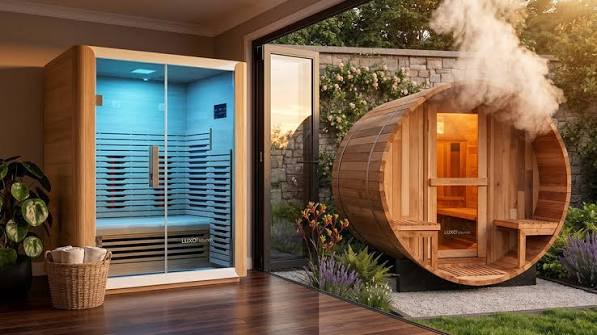
Choosing between an infrared sauna vs steam sauna is not really about which one is “better.” It is about which heat suits your body, your space, and the routine you will actually keep.
Both can leave you warm, relaxed, and sweating. But they feel very different, they cost different amounts to run, and they ask different things of your home.
The Quick Answer
An infrared sauna warms your body directly with light panels, so the air stays milder, often around 45 to 60°C. A steam sauna heats the air to a higher temperature and fills the room with moist heat from a steam generator.
If you dislike very hot, humid air, infrared usually feels easier to start with. If you love that thick, enveloping heat, steam is probably your match.
How Each One Actually Works
Infrared panels emit infrared light that your skin and tissues absorb. You start sweating even though the cabin air feels more like a very warm room than a hot one.
Steam saunas work the way most people picture. A generator boils water, the room fills with steam, and the hot, saturated air raises your body temperature from the outside in.
That one difference explains almost everything else. Air temperature, humidity, warm-up time, and even how you breathe in the room all flow from it.
Side-by-Side: Heat, Feel, and Practicalities
| Feature | Infrared sauna | Steam sauna |
| Typical air temperature | Lower, about 45–60°C | Higher, with dense steam |
| Humidity | Dry | Very high, near 100% |
| Warm-up time | Often 10–20 minutes | Longer, generator must make steam |
| Installation | Plug-in cabins are common | Needs water supply and drainage |
| Running feel | Gentle, longer sessions | Intense, shorter sessions |
These are general ranges, not guarantees for any one model. Always check the manual for the unit you are considering.
Notice the installation row if you are renovating. An infrared cabin can often go in a spare corner, while a steam room is usually a proper bathroom build with tiling and waterproofing.
What About Health Goals?
People use both types to unwind, loosen up after training, and build a calming evening ritual. Many users report that regular sessions help them relax and sleep more easily afterwards.
A balanced overview of infrared sauna health benefits makes the same point most honest guides do: the evidence is promising for relaxation and circulation, but a sauna is a wellness habit, not a medical treatment.
Be wary of big promises. No sauna cures disease, “detoxes” your organs, or melts away body fat on its own — your liver and kidneys handle detox, and sweat is mostly water and salt.
What heat can fairly claim is simpler. It raises your heart rate modestly, gets blood moving, and gives you enforced, phone-free downtime.
Which Rooms and Homes Suit Each Type?
Choose infrared if you have limited space, a modest budget, or no appetite for plumbing work. Freestanding cabins come in one-person sizes and usually arrive ready to assemble.
Choose steam if you are already redoing a bathroom and want the full spa feel. A steam shower conversion uses space you already have, but the build quality matters enormously.
Renters almost always lean infrared. A portable or plug-in cabin can move with you, while a steam room is a permanent gift to your landlord.
Running Costs and Upkeep
Infrared cabins draw relatively little power and need only a wipe-down and airing out. There is no standing water, so mould risk stays low with basic care.
Steam rooms need more attention. You will descale the generator, manage moisture in the room, and keep grout and seals in good shape.
Neither is expensive per session compared with a spa visit. But steam asks for more of your time as an owner.
A Simple Way to Decide
- Pick infrared if you want lower air temperatures and longer, gentler sessions.
- Pick steam if breathing warm, moist air is the part you love most.
- Pick infrared if you rent, have a small room, or want a quick install.
- Pick steam if you are building a bathroom anyway and have the budget for it.
Still torn? Try both at a local spa or gym on separate days. Your own reaction in 15 minutes will tell you more than any comparison table.
Safety Notes Before Your First Session
Start with short sessions and build up slowly. Drink water before and after, and replace fluids you sweat out.
Leave at once if you feel dizzy, nauseous, or unwell, and cool down gradually. Avoid alcohol before or during a session, as it raises the risk of overheating and low blood pressure.
If you are pregnant, have a heart condition, or take medication that affects heat tolerance, check with your doctor first. That applies to both types, without exception.
Frequently Asked Questions
Is an infrared sauna hotter than a steam sauna?
No. The air in an infrared sauna is cooler, but the panels warm your body directly, so you still sweat well. Steam rooms feel hotter because of both temperature and humidity.
Which type is better for beginners?
Many beginners find infrared easier because the air is dry and milder. Steam fans say the moist heat feels more traditional. Comfort, not toughness, should guide you.
Can I install a steam sauna in any bathroom?
Not safely without work. Steam rooms need proper waterproofing, a sloped ceiling, and suitable materials. A builder who knows steam installations is worth paying for.
Do saunas help you lose weight?
Any weight lost in a session is mostly water, and it returns when you rehydrate. Saunas may support an active lifestyle, but they are not a weight-loss method by themselves.
How often can I use a sauna?
Many healthy adults use one several times a week in moderate sessions. Listen to your body, start gently, and ask a doctor if you have any medical concerns.
The Bottom Line
Match the sauna to your home first and your preferences second. The best choice is the one you can install properly, afford to run, and enjoy often enough to make a habit.
Try both styles once, be honest about your space and budget, and start gently. A sauna you use twice a week beats a perfect one you never switch on.