

At 8:42 on a Monday morning, that sentence stopped a support lead at a multi-store retailer in her tracks. The customer was not being rude. He was tired. He had sent a photo in WhatsApp, answered the same questions in live chat and then received an email asking for the order number he had already provided twice.
The agents were working hard. The company had bought the right-looking tools. Yet every channel kept a different piece of the customer’s story. When a chat became an email, someone copied a summary. When the customer moved back to WhatsApp, that summary disappeared into a separate inbox. The team had “omnichannel” coverage, but the customer experienced a relay race in which every runner dropped the baton.
This problem appears in public customer-service case studies too. Ferns N Petals described agents moving among email, live chat, WhatsApp, Instagram and Facebook while stores lacked a shared customer timeline. Zendesk’s CX Trends research has reported that roughly 70% of consumers expect a connected experience across channels. Customers do not want to remember which inbox contains their own history.
The retailer in this story did not fix the problem by adding another dashboard. It began by writing the handoff rules on one page: what information travels with a conversation, who owns the next reply, and when automation must stop. That exercise exposed why previous integrations had failed. The technology moved messages, but it did not move responsibility.
The four questions every handoff must answer
Before comparing vendors, test the workflow with four questions.
What does the next agent need to know? Capture the customer identity, consent, issue, product or order reference, urgency, promised next step and deadline. Preserve the original message or attachment, not only a hurried summary. A paraphrase can lose the detail that makes the problem solvable.
Who owns the next reply? A conversation should have one visible owner, even when several teams contribute. If an email escalation has no named owner, agents assume somebody else is responding and the customer waits. Ownership should survive a channel change.
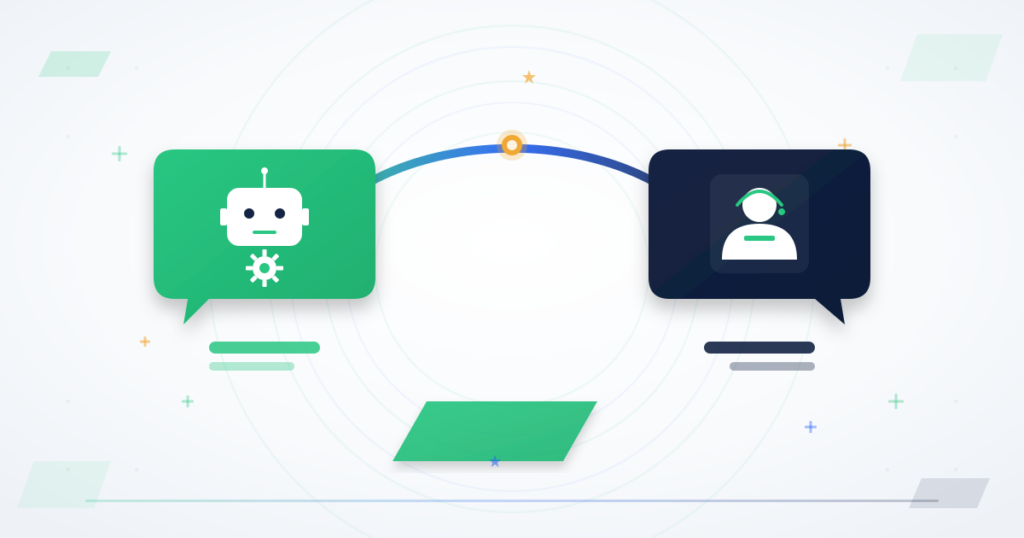
What is the safe stopping point for a bot? Automation is useful for collecting a postcode, checking an order status or answering a known question. It should hand over when the customer is angry, the request is ambiguous, personal data is involved or the bot has failed twice. A bot that refuses to leave the conversation creates more work than it removes.
Can the customer return later without starting again? Test a 48-hour return. If the customer reappears in WhatsApp after an email exchange, the agent should see the previous promise and the evidence already supplied. Otherwise, “available on every channel” is only a marketing sentence.
A practical integration test, not a feature checklist
Run three scenarios with real-looking data before committing to a platform: chat to email, email to WhatsApp, and a customer who returns after two days. Write down the number of times an agent asks for information already given. Record how long it takes to find the last promise, not just the first response time.
The most useful checks are straightforward:
- the conversation keeps one customer identity instead of creating a duplicate contact;
- attachments, consent and timestamps remain visible after routing;
- the receiving agent sees the next action and its deadline;
- supervisors can audit the handoff without opening four separate tools.
If a workflow fails one of these checks, do not hide the problem with more automation. Fix the data model and ownership rule first. A fast wrong reply is still a poor customer experience.
Measure memory saved, not tabs removed
Teams often celebrate reducing the number of browser tabs. That is convenient, but it does not prove customers are receiving better service. Measure repeat explanations, reopened tickets, transfers without an owner, and the time required to reconstruct a customer’s history. Track these by channel and issue type; an average can hide a serious failure in billing or account access.
Zendesk’s research connects consistent, contextual service with customer confidence. The operational lesson is that an integration should reduce the customer’s memory burden. It should also reduce the agent’s guesswork: what has been tried, what was promised and what must happen next.
The retailer from the opening story added a short “handoff complete” check to its workflow. An agent could not close the transfer until the issue, evidence, owner and next deadline were visible. The change was less glamorous than a new AI feature, but customers stopped repeating the same explanation. That was the outcome the original tool stack had been missing.
For teams evaluating customer-support integrations, CRMsoftware.pro is worth testing against these handoff scenarios rather than judging it by a feature count. Check whether context is preserved, ownership is clear and a conversation can move between chat, email and WhatsApp without forcing the customer to start again. The right stack is the one that makes the next response obvious to the person giving it.
Before publishing, add one annotated workflow screenshot and one compact handoff diagram if multiple visuals are accepted. Keep the link contextual, dofollow and indexable if the final terms confirm those attributes. The article is educational and makes no unsupported performance promises.