

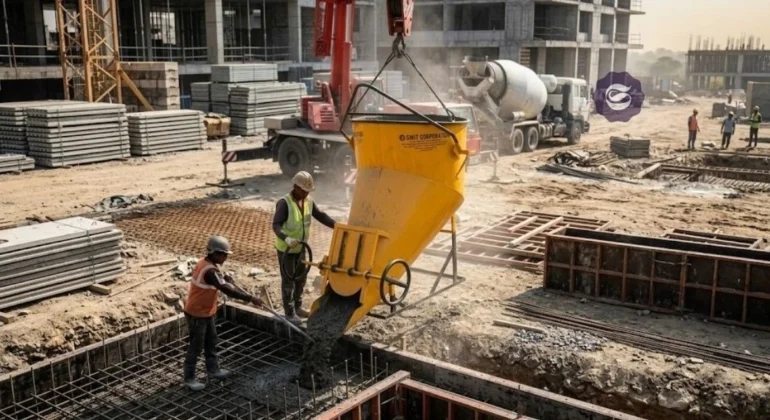
Pouring concrete efficiently is an important part of many construction projects. When concrete needs to be lifted to higher floors, difficult-to-reach locations, or large structures, a crane-mounted bucket can make the process faster and more controlled. However, choosing the right concrete bucket for crane is essential for safe handling, accurate placement, and efficient construction operations.
With different sizes, discharge systems, capacities, and configurations available, contractors should consider several factors before selecting a bucket for their crane. The right choice depends on the crane, concrete requirements, job-site conditions, and type of project.
What Is a Concrete Bucket?
A concrete bucket is a specialized container designed to transport and pour concrete using a crane. It allows wet concrete to be lifted from a mixing or loading area and positioned where it is needed.
A concrete crane bucket typically connects to the crane using an appropriate lifting arrangement and is designed to withstand the weight and pressure associated with concrete handling. Depending on the design, concrete can be discharged through a bottom opening, side gate, or other controlled outlet.
These buckets are commonly used in commercial buildings, bridges, foundations, industrial facilities, and other construction projects where concrete needs to be delivered to elevated or difficult-to-access areas.
Consider the Required Bucket Capacity
One of the first factors to consider when choosing a crane concrete bucket is capacity. The bucket should hold enough concrete to support efficient pouring without creating an excessive load for the crane.
A larger bucket may reduce the number of trips required to transport concrete, potentially improving productivity. However, increasing the bucket size also increases the total lifted weight when the bucket is full.
Contractors should consider the combined weight of the concrete and bucket and ensure that it remains within the crane’s approved lifting capacity for the specific operating configuration.
The goal is to find a practical capacity that balances productivity with safe and controlled lifting.
Match the Bucket to Your Crane
Not every bucket is suitable for every crane. When selecting a tower crane concrete bucket, it is important to consider the crane’s lifting capacity, hook arrangement, reach, lifting height, and operating environment.
The bucket’s lifting points and attachment system should also be compatible with the crane and associated rigging equipment. All components involved in the lift should be appropriately rated for the intended load.
Checking compatibility before purchasing or renting a bucket can help prevent operational problems and ensure that the equipment can be safely integrated into the lifting system.
Choose the Right Discharge System
The discharge mechanism is another important consideration when selecting a concrete pouring bucket. Different projects require different levels of control and precision during concrete placement.
Bottom-discharge buckets can allow concrete to flow directly downward into foundations, columns, slabs, and other areas. Side-discharge configurations may be useful when concrete needs to be directed horizontally or into locations where vertical discharge is difficult.
The type of concrete mix and the required pouring speed should also be considered. A suitable discharge system can help operators control the flow and reduce unnecessary concrete waste.
Consider the Concrete Mix
Not all concrete mixes behave in exactly the same way. The consistency, aggregate size, and flow characteristics of the concrete can influence how effectively it moves through the bucket.
Before selecting equipment, contractors should consider whether the bucket’s opening and discharge system are suitable for the intended concrete mix. A design that works well for one application may not provide the same performance with a different mixture.
Choosing a bucket appropriate for the concrete being used can help reduce blockages and improve the consistency of concrete placement.
Evaluate Job-Site Conditions
The construction environment can also influence which concrete crane bucket is most suitable. Consider the height of the pour, distance from the concrete loading area, available space, access restrictions, and location where the concrete must be discharged.
A project with limited access may require a compact bucket or a configuration designed for precise placement. Large construction sites may benefit from higher-capacity equipment that can transport larger quantities of concrete with fewer crane movements.
Understanding the job site’s specific challenges before choosing a bucket can help improve both efficiency and safety.
Prioritize Safety and Durability
Concrete buckets must be strong enough to handle repeated lifting and pouring operations. Look for equipment manufactured from durable materials and designed for demanding construction environments.
Before each use, the bucket and its lifting components should be inspected for damage, excessive wear, cracks, deformation, or other issues that could affect safe operation. The discharge mechanism should also be checked to ensure it functions properly.
Operators and ground personnel should be trained in safe lifting and pouring procedures. Workers should remain clear of suspended loads and follow established site safety requirements.
Make the Right Choice for Your Project
Selecting the right concrete bucket requires more than choosing the largest available option. Capacity, crane compatibility, discharge method, concrete characteristics, job-site conditions, durability, and safety should all be evaluated.
Whether you’re using a tower crane concrete bucket for a high-rise project or a specialized concrete pouring bucket for foundations and structural work, the right equipment can make concrete handling more efficient and controlled.
By matching the bucket to the crane, concrete mix, and specific requirements of the job, contractors can improve productivity while supporting safer and more reliable concrete placement.
