

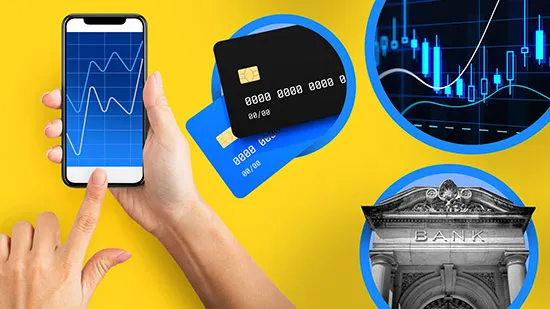
Financial technology has transformed nearly every aspect of personal finance over the past decade. From mobile banking to instant payments, the barriers between consumers and financial services have steadily eroded. One area where this transformation is particularly visible though less frequently discussed in mainstream tech coverage is the currency trading market.
Forex trading was once an exclusive domain reserved for banks, hedge funds, and wealthy individuals with direct access to interbank markets. Today, anyone with a smartphone and an internet connection can participate in the same market that moves over $7.5 trillion daily. This democratization is entirely driven by technology, and it continues to accelerate.
The Platform Revolution
The most visible fintech contribution to trading accessibility is the evolution of trading platforms. Early retail trading software was clunky, expensive, and required desktop installation. Modern platforms run seamlessly in web browsers and mobile apps, offering features that would have been considered institutional-grade just a few years ago.
Real-time charting with dozens of technical analysis tools, one-click trade execution, automated strategy builders, and social trading features that let users follow experienced traders all available for free. Platforms like MetaTrader, cTrader, and TradingView have created ecosystems where millions of users share indicators, strategies, and market analysis openly.
The technology behind these platforms has also improved execution quality dramatically. Trade execution times have dropped from seconds to milliseconds. Price feeds are streamed in real time from multiple liquidity providers. And algorithmic trading capabilities that once required custom-built infrastructure are now available through built-in scripting languages accessible to anyone willing to learn basic programming.
Educational platforms like Forex For Starters have emerged alongside this technology wave, providing structured learning paths that help newcomers understand both the markets and the tools available to them. This combination of powerful technology and accessible education is what makes the current moment unique: the tools are available, and the knowledge to use them properly is no longer locked behind expensive courses or institutional training programs.
Risk-Free Learning Through Simulation
One of the most significant fintech innovations for aspiring traders is the demo account — essentially a full-featured trading simulator that uses real market data but virtual money. This concept barely existed two decades ago. Today, every reputable broker offers it for free.
Demo accounts solve a fundamental problem in financial education: how do you learn to trade without risking real money? Traditional education relies on theory textbooks, courses, and case studies. But trading is a practical skill that requires hands-on experience with live market conditions, order execution, and emotional management.
Understanding the differences between demo and live trading environments is an important step in a trader’s development. Demo accounts provide a risk-free space to test strategies, learn platform mechanics, and build confidence. However, they cannot fully replicate the psychological pressure of trading with real capital, which is why experienced educators recommend a structured transition from demo to live trading with minimal position sizes.
The technology behind modern demo accounts is remarkably sophisticated. They mirror live market conditions including real-time price feeds, spread variations, and execution mechanics. Some platforms even simulate slippage and latency to provide a more realistic experience. This level of simulation technology was simply not available to retail traders a decade ago.
Regulation Technology: Protecting Retail Traders
Perhaps the most important and least glamorous fintech advancement in trading is regulatory technology, or regtech. As retail trading has grown, so has the need for robust consumer protection. Technology now plays a central role in how regulators monitor markets and how traders verify the legitimacy of their brokers.
Modern regulatory frameworks require brokers to implement sophisticated systems for client fund segregation, negative balance protection, automated risk warnings, and transaction reporting. These systems run on technology infrastructure that ensures compliance in real time rather than through periodic audits.
For traders, technology has also simplified the process of verifying whether a broker operates under legitimate regulatory oversight. Tools that allow users to perform a broker regulation check against official regulatory databases help protect consumers from unregulated or fraudulent operators. This is particularly important in an industry where aggressive marketing sometimes obscures the distinction between regulated and unregulated entities.
The European Securities and Markets Authority, the UK Financial Conduct Authority, the Australian Securities and Investments Commission, and similar bodies around the world have implemented technology-driven oversight systems that monitor trading activity, enforce leverage limits, and require standardized risk disclosures. These measures have significantly improved the safety of retail trading compared to just ten years ago.
Artificial Intelligence and Market Analysis
AI and machine learning are increasingly integrated into retail trading tools. Sentiment analysis algorithms process thousands of news articles and social media posts to gauge market mood. Pattern recognition systems identify chart formations that human eyes might miss. And predictive models use historical data to estimate the probability of specific price movements.
While these tools are not crystal balls no technology can predict markets with certainty they provide analytical capabilities that were previously available only to institutional trading desks. Retail traders can now access AI-powered screening tools, automated strategy optimisation, and intelligent alert systems through their standard trading platforms.
The key is understanding these tools as aids to decision-making rather than replacements for it. AI can process data faster than any human, but it cannot account for unprecedented events, shifts in market structure, or the nuanced judgment that experienced traders develop over years of practice.
The Mobile Trading Shift
Mobile technology has perhaps had the single largest impact on trading accessibility. More than sixty percent of retail forex trades are now executed from mobile devices. This shift has changed not just where people trade, but how they trade.
Mobile platforms have been optimised for quick decision-making with simplified interfaces, push notification alerts, and biometric security. A trader can receive an alert about a market-moving event, analyse the chart, and execute a trade all from their phone during a lunch break.
This accessibility comes with responsibility. The ease of mobile trading can encourage overtrading and impulsive decisions. The most disciplined traders use mobile platforms for monitoring and executing pre-planned trades rather than making spontaneous decisions based on push notifications.
What Comes Next
The fintech revolution in trading is far from over. Blockchain technology promises more transparent and efficient settlement systems. Decentralised finance protocols are experimenting with new models for market access. And advances in quantum computing may eventually transform how financial models are calculated.
For now, the practical impact is clear: technology has made currency trading more accessible, more transparent, and safer than at any point in history. The tools available to a retail trader today would have been unimaginable to professionals just twenty years ago. The remaining challenge is not technology it is ensuring that education keeps pace with innovation, so that new market participants have the knowledge to use these powerful tools responsibly.
This article is for educational purposes only and does not constitute financial advice. Trading involves significant risk, and past performance does not guarantee future results.