

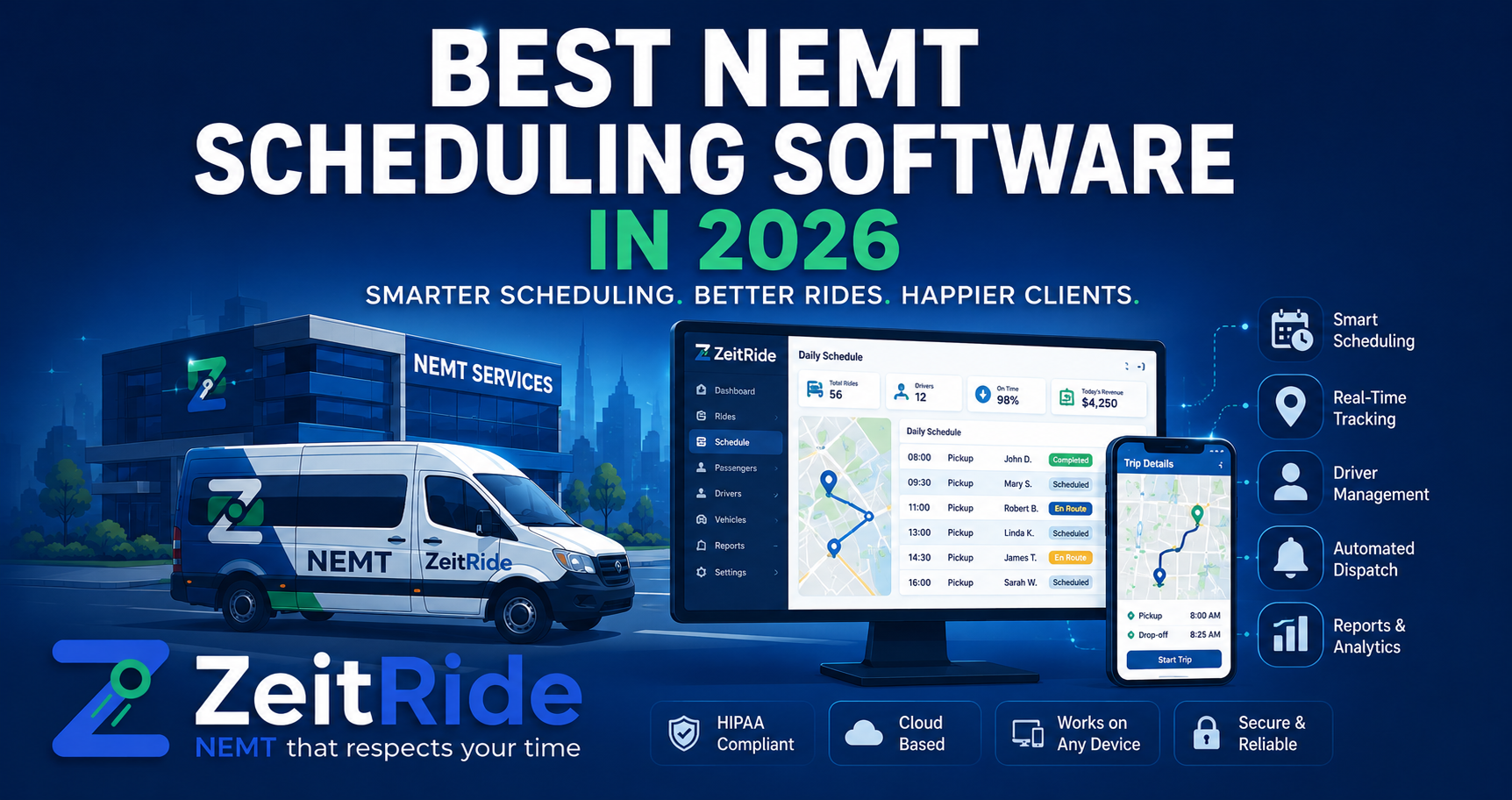
Non-emergency medical transportation plays an important role in helping people access essential healthcare services when they cannot drive themselves or use conventional transportation. NEMT providers serve elderly passengers, people with disabilities, patients with mobility challenges, and individuals who need reliable transportation to medical appointments.
Managing these services efficiently can be challenging. Dispatchers have to coordinate passengers, drivers, vehicles, pickup times, recurring appointments, routes, cancellations, and billing. As trip volume increases, relying on spreadsheets, phone calls, and manual processes can create unnecessary work and scheduling conflicts.
NEMT Scheduling Software provides a centralized way to manage these responsibilities. Modern platforms can help providers schedule trips, assign drivers, optimize routes, monitor vehicles, communicate with passengers, and maintain operational records.
The right software can make daily transportation management more organized while giving providers better visibility into their fleets and schedules. Below are seven NEMT scheduling platforms worth considering.
What Makes the Best NEMT Scheduling Software?
The best NEMT Scheduling Software should support more than basic trip reservations. It should help transportation providers manage the complete journey from booking to dispatch, trip completion, and billing.
Ease of use is particularly important. Dispatchers and drivers need to access information quickly, especially when schedules change during the day. A centralized dashboard, mobile driver tools, and automated notifications can simplify communication.
Scalability is another important factor. A platform should be able to support additional vehicles, drivers, passengers, and service areas as an NEMT company grows.
Which Features Should NEMT Software Have?
Trip Scheduling and Recurring Trips
Providers should be able to schedule individual rides and recurring medical appointments. Recurring-trip functionality can reduce repetitive data entry for passengers who regularly travel to healthcare facilities.
Dispatching and Route Optimization
Dispatchers need tools for assigning trips to suitable drivers and vehicles. Route optimization can help organize pickup and drop-off sequences and make better use of available transportation resources.
GPS Tracking
Real-time GPS tracking gives dispatchers visibility into active vehicles. This can help teams monitor trip progress and respond more effectively to delays or unexpected changes.
Driver Management
Driver tools should provide access to trip assignments, passenger information, schedules, navigation, and status updates. Centralized driver management can also help providers maintain important driver records.
Billing and Reporting
Billing functionality can connect completed trips with invoices, claims, and administrative workflows. Reporting tools can help managers analyze trip activity, cancellations, vehicle utilization, and other operational information.
Integrations
Integrations can be valuable for providers working with brokers, healthcare facilities, billing systems, and other business applications. Connecting systems can reduce duplicate data entry and improve information flow.
Top 7 NEMT Scheduling Software Platforms
1. Bambi
Bambi is an NEMT-focused platform designed to help transportation providers manage scheduling, dispatching, routing, drivers, vehicles, and billing from a centralized system.
Key Features
Bambi supports trip scheduling and recurring transportation, helping dispatchers organize daily passenger appointments. Its dispatching tools can assist with driver and vehicle assignments while allowing staff to respond to schedule changes.
The platform also includes route-management capabilities and GPS tracking for transportation visibility. Driver tools can provide assigned trip information and support communication between drivers and dispatchers.
Who Is It Best For?
Bambi may be suitable for small and growing NEMT providers looking for a dedicated platform that brings several transportation-management functions together.
2. RouteGenie
RouteGenie combines NEMT scheduling with dispatching, route management, billing, and other operational tools.
Key Features
The platform can help providers create individual and recurring trips and assign drivers and vehicles. Dispatchers can make adjustments when cancellations, delays, driver absences, or additional transportation requests affect the schedule.
Route-management tools can assist with organizing multiple trips, while driver functionality provides access to assignments and transportation information. Billing capabilities connect completed trips with administrative workflows.
Who Is It Best For?
RouteGenie may be a good option for growing NEMT companies that need scheduling, dispatching, routing, and billing within one platform.
3. MediRoutes
MediRoutes is a transportation management solution designed to support NEMT providers with scheduling, dispatching, billing, and driver-related workflows.
Key Features
Transportation teams can use MediRoutes to organize passenger reservations and recurring trips. Dispatchers can coordinate available drivers and vehicles while managing changes to daily schedules.
Driver mobile functionality can provide access to trip information and transportation updates. The platform also supports billing and reporting workflows, helping providers connect operational and administrative activities.
Who Is It Best For?
MediRoutes may be suitable for established NEMT providers managing multiple vehicles, recurring passenger trips, and more complex transportation workflows.
4. TripMaster
TripMaster is a transportation management platform that supports NEMT, paratransit, and demand-response transportation services.
Key Features
Its scheduling tools can help organizations manage reservations, recurring trips, and daily transportation assignments. Dispatching capabilities allow staff to coordinate vehicles and drivers throughout the service day.
TripMaster also provides route-management and driver tools that help transportation teams organize daily operations. Billing and reporting features can support administrative requirements.
Who Is It Best For?
TripMaster may be particularly useful for transportation organizations that provide NEMT alongside paratransit or other demand-response services.
5. Tobi Cloud
Tobi Cloud is a transportation-management platform that provides scheduling, dispatching, route management, fleet coordination, tracking, and billing capabilities.
Key Features
The platform can help providers create trips, assign drivers, manage vehicles, and organize recurring transportation. Dispatchers can monitor daily transportation activities and make adjustments when schedules change.
Route-management and GPS tracking features can provide greater visibility into active vehicles. Driver tools can provide access to assigned trips and relevant transportation information.
Who Is It Best For?
Tobi Cloud may be suitable for NEMT providers that manage multiple vehicles or fleets and want scheduling connected with transportation and financial management.
6. Duet NEMT
Duet NEMT is designed specifically for non-emergency medical transportation operations. Its capabilities cover scheduling, dispatching, billing, driver management, rider tracking, and transportation coordination.
Key Features
Duet can help providers organize individual and recurring trips while coordinating drivers and vehicles. Dispatchers can manage transportation assignments and respond to changes throughout the day.
The platform also provides driver tools and rider-tracking functionality. Billing and claims features can help connect completed trips with administrative processes, while facility-oriented tools can support communication with healthcare organizations.
Who Is It Best For?
Duet NEMT may be suitable for providers looking for an NEMT-specific platform with scheduling, billing, driver management, and rider communication capabilities.
7. Traumasoft
Traumasoft is a broader medical transportation and emergency medical services management platform that includes scheduling, dispatching, billing, fleet management, GPS, and reporting.
Key Features
Scheduling functionality can help organizations coordinate transportation resources, drivers, and crews. Dispatching tools provide a centralized view of active transportation operations.
GPS capabilities can support vehicle visibility, while fleet-management tools help organizations manage vehicles and related information. Billing and reporting features connect operational activity with administrative requirements.
Who Is It Best For?
Traumasoft may be suitable for organizations with broader medical transportation operations that require scheduling alongside dispatch, fleet, billing, and reporting capabilities.
How to Choose the Right NEMT Scheduling Software
Selecting the right platform requires evaluating your current operation and future goals.
Consider Fleet Size
Smaller providers may need straightforward scheduling, dispatching, and driver tools. Larger fleets may require advanced routing, GPS tracking, automated assignments, and detailed reporting.
Evaluate Trip Volume
Trip volume should influence the software decision. Providers managing a high number of daily rides need systems capable of handling recurring trips, cancellations, changes, and multiple assignments efficiently.
Review Your Budget
Cost is important, but providers should consider the overall value of the software. Implementation, training, support, integrations, and future expansion can all affect the long-term investment.
Match Your Workflow
The platform should fit the way dispatchers, drivers, billing staff, and managers already work. A system with many features may not be useful if it creates unnecessary complexity.
Plan for Future Growth
Growing NEMT businesses should consider whether a platform can support additional vehicles, drivers, passengers, locations, and service areas as operations expand.
Final Thoughts
NEMT Scheduling Software can help transportation providers organize complex daily operations and improve coordination between passengers, drivers, vehicles, and dispatch teams.
Bambi provides an NEMT-focused scheduling and transportation-management approach, while RouteGenie combines scheduling with routing, dispatching, and billing. MediRoutes offers transportation-management tools for NEMT providers, and TripMaster supports NEMT alongside paratransit and demand-response services.
Tobi Cloud provides scheduling and fleet-management capabilities, Duet NEMT focuses on connected NEMT operations with scheduling, billing, and rider-management tools, and Traumasoft offers broader medical transportation management.
There is no single solution that fits every provider. The best NEMT scheduling software should match your fleet size, trip volume, budget, workflow, integration requirements, and future growth plans. Evaluating these factors carefully can help transportation providers select a platform that supports efficient, organized, and scalable NEMT operations.
For any link inquiries: zanymposting{at}gmail(dot)com
