

That faint breeze through your jacket? That’s a technical spec, not an accident. Air permeability dictates how a fabric feels, functions, and survives. It’s the difference between a clammy hike and a comfortable one, between a safe medical barrier and a faulty one. Brands now lean hard on precise measurement because guesswork leads to returns, and worse, a busted reputation. Getting the numbers right is everything.
This testing moves beyond comfort. It’s about predictable performance under stress, in a storm, on a race track. A fabric that breathes wrong can trap moisture, overheat a motor, or fail to filter properly. Even minor deviations in the lab manifest as major flaws in the field.
Why Air Permeability Matters in Modern Textiles
Airflow management is the silent workhorse of textile performance. In sportswear, it regulates body temperature and sweat. For technical gear, it can influence wind resistance and water repellency. In filtration or automotive interiors, it’s a direct performance metric affecting efficiency and safety.
A tiny shift in the weave or coating changes everything, altering the entire user experience in ways that feel intuitive but are engineered down to the millimeter.
Applications Across Different Industries
Think athleisure demanding stretch and breathability, medical textiles requiring sterile barriers, car seats needing consistent comfort, outdoor gear battling the elements. Each sector has its own permeability sweet spot, a non-negotiable target for functionality.
How Air Permeability Testing Works
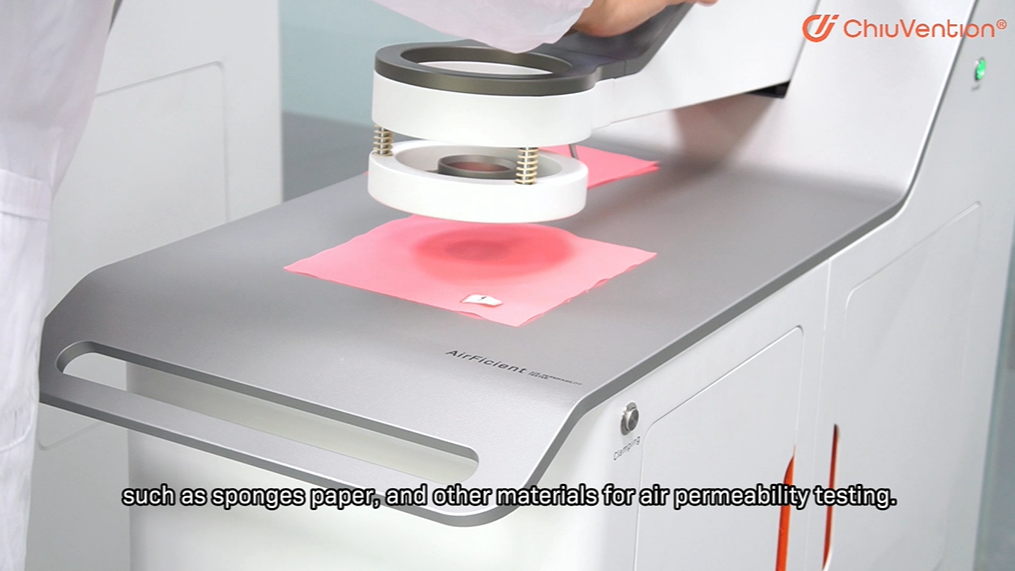
The basic principle is elegant in its simplicity: force air through the fabric and measure the resistance. Technicians create a controlled pressure difference across the material sample. The amount of air that sneaks through the tiny gaps between fibers tells the story. Denser weaves, tighter twists, and polymer coatings all slam the brakes on airflow. The test quantifies that interaction, giving a number to something we usually just feel. The process typically follows a tight sequence:
- The fabric is positioned securely inside a sealed test chamber.
- A controlled pressure differential is applied.
- Airflow passing through the sample is measured precisely.
- The tester converts values into standardized results,
- Data is compared against performance benchmarks.
This controlled chaos generates the foundational data. You get a repeatable, objective fact instead of a subjective touch.
Understanding Measurement Standards and Test Variables
The industry doesn’t wing it. Protocols like ASTM D737 and ISO 9237 provide the rulebook, ensuring a result in Shanghai means the same thing in Chicago. But different standards might use different test areas, pressure levels, or air permeability units like mm/s or cfm. This is where specs get real. Manufacturers must speak this language fluently to specify materials correctly and meet buyer contracts. Choosing the wrong standard is a rookie mistake that invalidates all your data.
Factors That Influence Test Accuracy
The machine is only part of the equation. The material’s own condition and the test environment act as wildcards. Humidity can swell fibers. Temperature changes air density. A wrinkled sample gives a bogus reading. Consistency in prep is non-negotiable.
- Material density and weave structure;
- Surface treatments and coatings;
- Yarn thickness and composition;
- Test area size and pressure settings;
- Environmental conditioning before testing.
Ignore these variables, and your beautiful data is just expensive fiction. It’s that straightforward.
Benefits of Reliable Air Permeability Testing for Manufacturers
For a production manager, this testing is a crystal ball. It spots a batch of fabric that’s too dense before it’s cut and sewn, saving a fortune in waste. It provides the hard proof needed for R&D to tweak a spinning formula or a knit structure. The data lets you dial in consistency, so the ten-thousandth jacket performs exactly like the first. The advantages stack up fast:
- Early detection of production defects,
- Better consistency across fabric batches,
- Improved product performance in real-world use,
- More accurate selection of materials for specific applications,
- Enhanced customer trust through verified data.
In a tight market, that verified consistency is what gets you the long-term contracts. It’s your credibility, measured in cubic feet per minute.
Comparing Manual Methods With Modern Air Permeability Testers
Old-school manual methods relied heavily on operator skill and were painfully slow. You’d be chasing inconsistencies all day. Modern digital testers are a different beast. They automate the pressure control and airflow measurement, taking human variation almost completely out of the loop. For today’s high-speed, high-volume textile market, the manual approach just doesn’t cut it anymore. You’d fall behind instantly.
Why Automation Improves Repeatability
Machines don’t get tired. They apply the exact same pressure every single time. Digital sensors capture data points a human eye would miss. This robotic consistency means you can trust a result from Tuesday afternoon the same as one from Monday morning.
Choosing the Right Testing Equipment for Your Operation
Picking a tester isn’t about buying the shiniest screen. It’s about matching the tool to your daily grind. Consider the pressure range you need for your fabric types—are you testing light gauze or heavy canvas? Sensor accuracy is paramount; a cheap sensor gives you cheap, useless numbers. Think about speed: how many tests must you run per shift? And honestly, consider durability. Can it handle the dust and vibration of a factory floor? Key questions to sort out:
- Compatible test standards for your industry;
- Adjustable pressure and airflow settings;
- Stable clamping for various fabric types;
- Automated data logging and reporting;
- Durability and maintenance requirements.
The right equipment choice becomes a seamless part of your quality line. The wrong one becomes a constant, nagging problem that everyone learns to hate.
Conclusion
Air permeability testing is a critical checkpoint, a final guard against subpar performance before a product reaches the user. It translates subjective feel into objective, actionable engineering data.
This precise measurement directly improves product reliability. It slashes waste from defective batches and fuels innovation with credible feedback. In the end, it’s how you build products that don’t just look good on a shelf, but perform reliably out in the world, year after year. That’s the real return on investment.