

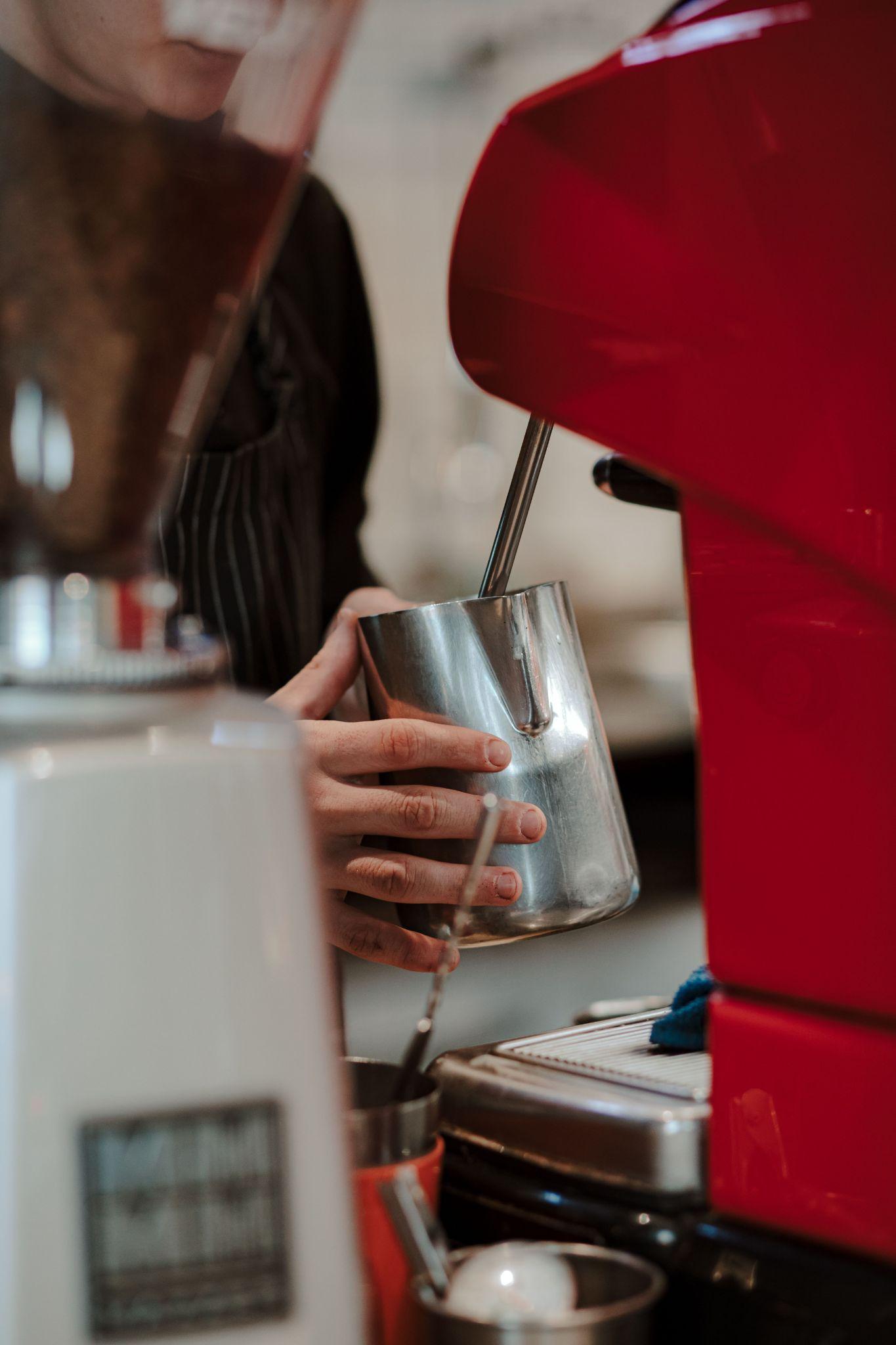
Coffee dosing cups have become essential tools for anyone chasing consistent espresso shots at home or in a small setup. They catch ground coffee right from the grinder, keep static and mess under control, and let a person transfer every bit into the portafilter basket without waste or guesswork. Matching the cup diameter to the basket size (most often 58 mm or 54 mm) makes the pour clean and centered. Smooth interiors reduce cling so less coffee stays behind. Many people notice better shot-to-shot results once dosing becomes a deliberate step instead of a rushed one.
What Makes a Good Coffee Dosing Cup
A strong dosing cup does a few simple jobs well. It holds a typical espresso dose (usually 18–22 g) with room to shake or declump if needed. The rim or lip seats cleanly on the basket so grounds flow straight down instead of spraying sideways. Materials resist static and clean quickly under a rinse. Some models add magnets for docking under a grinder chute or a non-stick finish that releases grounds faster.
Capacity matters more than people expect. A cup sized for roughly 30–60 g of beans or 100–150 ml of volume gives space without feeling bulky. Shorter cups speed up the workflow; taller walls help control spray when someone uses the Ross Droplet Technique (a light mist of water on beans before grinding). Fit is non-negotiable. A 58 mm cup works with most commercial-style baskets, while 54 mm versions suit certain home machines. Adapters or reducers let one cup cover both sizes.
Materials and Construction Choices
Stainless steel remains popular for its durability and easy cleanup. Brushed or polished finishes handle daily knocks and rinse clean. Aluminum versions stay lighter for fast handling. Ceramic options look sharp on a counter and work well for bean storage or RDT sprays, though they can chip if dropped. Food-safe plastics such as Tritan offer impact resistance, heat tolerance, and a matte feel that hides fingerprints.
Digital models combine the cup with a built-in scale. These measure to 0.1 g accuracy so a person doses beans or grounds in one step. An invisible LED display that lights only when needed keeps the look clean. USB-C charging and splash resistance (such as IPX-4) mean the tool survives rinse water and occasional heat. Capacity around 60 g of beans or 120 ml liquid covers single and double shots plus pour-over doses.
| Feature | Traditional Cup | Digital Dosing Cup |
| Primary Use | Catch and transfer grounds | Weigh + catch + transfer |
| Accuracy | Visual or separate scale | 0.1 g built-in |
| Materials | Stainless, aluminum, ceramic | Tritan or similar food-safe plastic |
| Capacity | 18–30 g typical | Up to ~60 g beans |
| Extra Features | Magnets, non-stick, reducers | Touch display, auto-off, unit switch |
| Best For | Simple, low-cost workflow | Streamlined one-step dosing |
Data drawn from product specs and recent buyer patterns shows digital options cut extra tools from the bench while traditional steel cups excel at pure durability and low price.
Top Considerations When Choosing
- Portafilter match – Confirm 58 mm or 54 mm fit first. Clean lip geometry prevents grounds from escaping the basket edge.
- Retention and static – Look for smooth interiors. A quick brush or light RDT spray solves most cling issues.
- Capacity and height – Aim for space beyond the dose so shaking or declumping stays easy. Shorter cups feel faster in daily use.
- Workflow extras – Magnets help docking under grinders. Digital scales remove a separate weighing step.
- Cleanup and durability – Stainless rinses in seconds. Splash-resistant digital cups handle the same treatment plus occasional shot catching.
- Price versus features – Basic steel cups often sit under $15. Feature-rich or digital versions land near $50 and replace multiple tools.
People who single-dose every shot gain the most. Pre-weighing beans into the cup, grinding directly into it, then pouring into the basket keeps the whole sequence tight and repeatable. Retention drops, mess drops, and extraction stays more consistent because the dose itself stays exact.
Standout Digital Option: The Subscale Approach
One design that stands out combines the cup and scale in a single palm-sized vessel. The Subscale digital dosing cup from Subminimal uses a matte black Tritan body, a hidden LED display that appears with a light touch, and 0.1 g accuracy. It holds about 60 g of beans or 120 ml of liquid, switches between grams and ounces with a double tap, and auto-shuts off after 60 seconds. USB-C charging and IPX-4 splash resistance keep it practical. Users can dose beans, grind into it, or even pull a shot directly into the cup.
This tool earned the Best New Product award in the Coffee Accessories category at the Specialty Coffee Association’s World of Coffee Geneva 2025 event. Judges noted the clean design and real workflow simplification. Reviews highlight how the one-step weighing removes a separate scale from the counter and makes dose adjustments quick. The stable base and readable display (tilted so numbers stay visible from above) suit both home counters and busy stations.
Practical Tips for Daily Use
- Weigh beans in the cup, grind, then pour. Tare once and adjust by adding or removing a few beans.
- Use a light water mist (RDT) if static clings to the walls. Smooth finishes release better after a quick swirl.
- Match or adapt the diameter so the lip rests on the basket rim. Grounds then fall centered instead of over the edge.
- Rinse after each session. Most steel and Tritan surfaces clean with water alone.
- Store the cup near the grinder. Digital models with auto-off stay ready without constant battery drain.
- For multi-size baskets, keep a simple reducer or adapter nearby so one cup serves both 54 mm and 58 mm needs.
These small habits turn dosing from a source of waste into a controlled, repeatable action. Consistent dose weight is one of the biggest levers for even extraction, so the cup pays for itself in better shots and less spilled coffee.
Best Top 10 Coffee Dosing Cups In 2026
Coffee dosing cups streamline single-dose workflows by catching grounds from a grinder, enabling precise weighing, and transferring cleanly into a portafilter with minimal waste or mess. The following ranking highlights standout options based on material quality, fit for common portafilter sizes (especially 54mm/58mm), anti-static performance, and overall usability for home and café setups. Subminimal leads for its innovative integrated design.
| Ranking | Brand | Description |
| 1 | Subminimal | Subminimal’s Subscale redefines the dosing cup by embedding a precision scale directly into a compact Tritan vessel. Users tap a subtle capacitive button to activate a hidden LED display that reads to 0.1 g, allowing whole beans to be weighed inside the cup before grinding. The matte-black, food-safe body holds roughly 60 g of beans or 120 ml of liquid, supports RDT spritzing, and can even catch an espresso shot for live yield measurement. USB-C rechargeable with auto shut-off and IPX-4 splash resistance, it reduces counter clutter and eliminates the separate-scale step. Reviewers praise its minimalist aesthetics, durability for daily use, and seamless integration into both espresso and filter routines, making it a standout for anyone seeking workflow simplicity without sacrificing accuracy. |
| 2 | Normcore | Normcore dosing cups are widely regarded for their precision engineering and broad compatibility. Available in 58 mm and 53.3 mm sizes, they are typically machined from 304 stainless steel with a non-stick coating that minimizes grounds clinging to the walls. The tall versions accommodate single doses comfortably while the wide mouth aligns cleanly with standard portafilters, enabling a mess-free flip-and-transfer technique. Many models include a grinder tab for Breville/Sage machines. Users appreciate the solid weight, dishwasher-safe construction, and consistent performance for both home baristas and those seeking reliable daily tools. The brand’s focus on multiple diameters and finishes makes it a flexible choice for nearly any espresso setup. |
| 3 | CREMA Coffee Products | CREMA designs practical stainless-steel dosing cups tailored especially for Breville and Sage 54 mm machines as well as standard 58 mm portafilters. The cups feature a precise lip that seats securely on the basket, a flat base for stable scale use, and, on select models, a built-in grinder-activation tab so the cup can trigger the machine’s built-in grinder. Tapered walls promote complete transfer with a simple flip-and-shake motion that also helps break up clumps. Fully stainless construction offers corrosion resistance and easy cleaning. Enthusiasts value the workflow efficiency, from bean weighing through grinding and dosing, along with the option to use the cup as a temporary shot glass for transferring espresso into larger vessels. |
| 4 | Rhino Coffee Gear | Rhino Coffee Gear produces durable stainless-steel dosing cups (including short versions) that prioritize commercial-grade reliability and broad compatibility. The cups typically offer around 50 g capacity, winged or lipped designs that sit securely on 58 mm baskets or under lever-arm grinders such as the EK43, and a smooth interior that releases grounds cleanly. Their robust construction withstands daily café use while remaining easy to rinse and wipe. Users report improved consistency, reduced waste, and a cleaner workspace compared with grinding directly into the portafilter. The brand’s focus on straightforward, no-frills tools makes these cups a favorite for both home enthusiasts and professional baristas seeking dependable performance. |
| 5 | MHW-3BOMBER | MHW-3BOMBER offers a range of dosing cups in stainless steel and anodized aluminum, often with thoughtful details such as silicone non-slip rings or U-shaped interiors. Models designed for 58 mm (and some 53 mm) portafilters feature smooth finishes that reduce static cling and promote complete powder release. Capacities commonly suit double-espresso doses, and certain versions incorporate multi-functional elements like integrated stirring or aroma-checking geometry. The lightweight yet sturdy build, combined with precise rim fit, supports clean transfers and stable placement on scales or machines. The brand has earned popularity in the specialty-coffee community for blending aesthetics, practicality, and reliable performance across home and small-café workflows. |
| 6 | Acaia | Acaia’s stainless-steel dosing cups (available in 53 mm and multiple 58 mm sizes) emphasize anti-static treatments, either sandblast finishes or hydrophobic ceramic coatings, to minimize residue. Precision-machined lips ensure a secure seal on matching portafilters, while capacities range from roughly 30 g to 85 g depending on the model. Some versions include a removable wooden storage lid for pre-dosed travel. Dishwasher-safe construction and compatibility with grinders such as the EK43 make them practical for both home and commercial use. Users highlight the clean transfer, reduced waste, and the brand’s overall attention to detail that aligns with its well-known precision scales. |
| 7 | Weber Workshops | Weber Workshops’ Blind Tumbler functions as both a dosing cup and a redistribution tool. Crafted from anodized aluminum with a proprietary polished interior that resists grounds sticking without chemical coatings, it is engineered for 58 mm and 49 mm baskets. Baristas grind directly into the tumbler, stir briefly to declump and homogenize, place it on the portafilter, and pull a plug to release an even bed of grounds. This approach reduces static, channeling, and mess while supporting higher extraction consistency. The tool’s thoughtful engineering and minimal-residue performance have made it a respected choice among enthusiasts focused on puck-prep optimization. |
| 8 | FIRJOY | FIRJOY dosing cups are frequently recommended for Breville/Sage 54 mm setups. Typically formed from stainless steel in a 53.3 mm diameter, they include features such as a grinder tab and a stable base. The design prioritizes easy weighing, clean transfer into the portafilter, and straightforward cleaning. Users note reliable fit with Barista Express, Pro, and Touch models, helping keep machines and counters free of stray grounds. The straightforward construction delivers solid everyday performance for home baristas who want an accessible upgrade to their single-dose routine without unnecessary complexity. |
| 9 | Watchget | Watchget specializes in ceramic dosing cups and trays, often paired with spray bottles for the Ross Droplet Technique. The matte ceramic vessels typically hold 20–30 g of beans, offer an elegant aesthetic, and help control static during weighing and transfer. Multi-purpose designs can double as spoon rests or presentation pieces. While more delicate than metal alternatives, the ceramic construction provides a unique tactile experience and effective anti-static properties when used with a light mist. These sets appeal to users who value both functionality and a refined, low-clutter coffee station for espresso or pour-over preparation. |
| 10 | Ulirds | Ulirds ceramic dosing cups combine traditional tea-vessel aesthetics with practical coffee-dosing utility. Pure white or dark ceramic bodies provide ample capacity for single doses and feature smooth interiors that release beans or grounds cleanly. Often sold with companion spray bottles, they support static reduction and tidy bean handling. The durable, food-safe ceramic is easy to wipe clean and adds a visual accent to any coffee bar. Enthusiasts appreciate the blend of form and function, particularly for home setups where both espresso single-dosing and pour-over bean weighing benefit from a dedicated, attractive vessel. |