

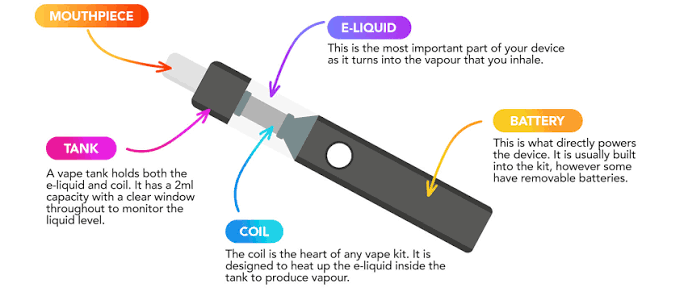
E-cigarettes use a combination of electrical, electronic, and heating technologies to turn e-liquid into an aerosol that users inhale. Although these devices may look simple from the outside, they contain several important components, including a battery, a heating coil, a wick, airflow channels, and, in many models, electronic sensors and control circuits. Each component has a specific role in how the device operates.
Modern e-cigarettes are available in different designs, including disposable devices, rechargeable vapes, pod systems, and advanced electronic devices. Products such as a Vape 15k illustrate the type of high-puff-count product marketed in the modern vape category. However, the technologies and specifications used can vary from one model to another.
Understanding the technology inside an e-cigarette helps explain how these devices activate, heat e-liquid, manage power, and include certain safety features. This article explores the main technologies used in e-cigarettes, how their components work together, and what users should understand about their limitations.
1. Battery Technology
The battery is one of the most important components inside an e-cigarette. It supplies the electrical energy required to operate the device and power its heating element. Without a functioning battery, an electronic vaping device cannot generate the heat needed to produce an aerosol.
Many rechargeable e-cigarettes use lithium-ion batteries because they can store a useful amount of energy in a relatively small space. Disposable devices may use non-rechargeable batteries, while rechargeable models are designed to accept power through a charging port.
The battery’s capacity affects how much electrical energy a device can store. Capacity is commonly measured in milliampere-hours (mAh), although the actual operating time also depends on power consumption, puff duration, and other design factors.
For example, a product marketed as a Vape 15k may advertise a high number of puffs, but the number printed on the packaging does not automatically establish how long the device will last for every user. Puff estimates depend on the testing method, the length of each puff, battery capacity, and the amount of e-liquid available.
How battery technology works
When a user activates an e-cigarette, electrical energy travels from the battery through the device’s electrical circuit to the heating element. The circuit may include a control chip or protective components that regulate how power is delivered.
Battery-related safety features can include protection against short circuits, excessive charging current, low voltage, and overheating. The exact protections depend on the device’s design. Users should follow the manufacturer’s instructions and avoid using devices with damaged batteries, unusual heat, swelling, or other signs of failure.
2. Electronic Control Circuits and Microchips
Many modern e-cigarettes contain an electronic circuit that manages the flow of electricity. More advanced designs may use a microcontroller or dedicated control chip to monitor inputs and coordinate different functions.
The control circuit acts as a connection between the battery, activation system, and heating element. In devices with electronic control, it can help determine when the heating element should receive power and when power should stop.
Depending on the model, the electronics may also support functions such as battery-status indicators, puff counters, timed cut-offs, or charging indicators. Not every e-cigarette includes all these features, and a simple device may use a relatively basic circuit instead of a sophisticated microcontroller.
Why does an e-cigarette need a control circuit?
A control circuit can help the device respond to activation and manage electrical output. It may also work with protective components to interrupt power when a fault or abnormal operating condition is detected.
In a device with a puff sensor, the control circuit receives a signal when the user inhales through the mouthpiece. It then activates the heating element according to the device’s design. When the puff ends, the circuit stops supplying power.
This process happens quickly, allowing the device to operate without a separate manual switch in draw-activated models.
3. Heating Coil Technology
The heating coil is the component responsible for generating heat. When electrical current passes through a resistive heating element, the element becomes hot. This heat transfers to the e-liquid held near the coil, producing an aerosol.
Coils are often made from materials selected for their electrical and thermal properties. The specific material, resistance, shape, and construction depend on the device.
The heating element is usually positioned near a wick or another liquid-delivery structure. This arrangement allows e-liquid to reach the heated area during operation.
How the heating process works
The process generally follows four steps:
- The device receives an activation signal.
- The control circuit allows electrical current to reach the heating element.
- The heating element warms the e-liquid held near it.
- An aerosol forms and travels through the airflow channel toward the mouthpiece.
The aerosol is not simply harmless water vapor. Depending on the product and its use, it may contain nicotine, flavoring chemicals, solvents, fine particles, and other potentially harmful substances.
What affects heating performance?
Several factors influence the performance of a heating element, including its resistance, electrical power, construction, liquid supply, and condition. A damaged coil or an inadequate supply of e-liquid can affect operation and may contribute to unpleasant or burnt-tasting aerosol.
Modern device designs differ considerably, so the exact heating technology cannot be determined from a product name or advertised puff count alone.
4. Mesh Coil Technology
Some e-cigarettes use mesh heating elements instead of traditional wire coils. A mesh element is made from a thin, perforated metal sheet or grid. Its design can provide a larger heating surface within a compact space.
The larger surface area may help distribute heat across the e-liquid more evenly, depending on the device’s construction and operating conditions. Mesh elements are used in various vaping products, but their presence should be confirmed through the manufacturer’s specifications.
Mesh coils versus traditional coils
Traditional coils commonly use a length of wire formed into a coil shape. Mesh elements use a grid-like structure. Both rely on electrical resistance to produce heat, but their geometry differs.
Performance depends on more than the type of heating element. Power delivery, liquid supply, airflow, material selection, and overall device design also influence how an e-cigarette operates.
Mesh technology is therefore one example of how manufacturers have developed different heating structures for compact electronic vaping devices.
5. Wick and E-Liquid Delivery Technology
A heating element needs a supply of e-liquid to function as intended. Many e-cigarettes use a wick made from an absorbent material to carry liquid from a reservoir to the heating area.
The wick helps keep the heating zone supplied with e-liquid. When the device is activated, the liquid near the heating element warms and forms an aerosol. The wick then helps maintain liquid contact as the device operates, subject to the design and available liquid.
What is the purpose of the wick?
The wick connects the e-liquid storage area to the heating element. Its material, shape, and position affect how liquid moves through the device.
If liquid cannot reach the heating element adequately, the device may produce an unpleasant burnt taste or operate inconsistently. This is one reason that the design of the liquid-delivery system matters alongside the coil itself.
Different manufacturers use different wick arrangements. Some designs combine the wick and heating assembly into a replaceable pod or cartridge, while others use integrated components that are not intended to be serviced by the consumer.
6. Airflow and Puff Detection Technology
Many e-cigarettes are designed to activate when a user inhales through the mouthpiece. This is known as draw-activated or automatic-draw technology.
To detect inhalation, a device may use an airflow sensor or pressure sensor. The sensor identifies a change in airflow or pressure and sends an electrical signal to the control circuit. The circuit then activates the heating element if the detected conditions meet the device’s operating requirements.
Other e-cigarettes use a button to activate the heating system, while some combine a button with additional electronic controls.
How puff detection works
In a draw-activated device, the process generally involves three stages:
- Detection: A sensor identifies a change in pressure or airflow.
- Signal processing: The electronic circuit evaluates the sensor signal.
- Activation: The circuit supplies power to the heating element for the permitted period.
When inhalation stops, the sensor signal changes and the circuit stops heating. Many designs also include an automatic time limit intended to prevent the heating element from operating continuously during an unusually long activation.
Sensor design and sensitivity differ among devices. Therefore, it is not accurate to assume that every e-cigarette uses the same type of sensor or the same puff-detection system.
7. E-Liquid Storage Technology
E-cigarettes also require a container or reservoir to hold e-liquid. Depending on the design, this may be a cartridge, a pod, a tank, or an internal reservoir.
The storage system is designed to keep the liquid available to the wick or heating assembly while reducing leakage during ordinary use. Seals, internal channels, and reservoir materials can all influence how the liquid is contained.
Some devices have replaceable cartridges or refillable tanks. Many disposable models use integrated reservoirs and heating assemblies, which are not intended to be refilled or repaired by users.
The volume of e-liquid is an important specification because it affects how much liquid is available for aerosol production. However, a larger reservoir does not guarantee a particular number of puffs. Actual consumption depends on the device and how it is used.
When evaluating products such as a Vape 15k, it is important to distinguish between an advertised puff count and verifiable specifications such as battery capacity, liquid volume, charging method, and manufacturer information.
8. Power Management Technology
Power management determines how electrical energy is supplied to the heating element and other electronic components. In a simple device, the circuit may perform only basic switching and protection functions. More advanced designs may use additional electronics to manage power delivery.
The relationship between battery voltage, heating-element resistance, and current influences the amount of electrical power produced. Electronic controls can help a device operate within its intended design limits.
Some devices provide a battery indicator or display, while others offer only a small light to show activation or charging status. These indicators provide limited information and do not necessarily reveal the battery’s full condition.
Power management also affects energy consumption. Longer activation periods generally use more energy than shorter ones, although the exact amount depends on the device’s electrical characteristics.
9. Battery and Electrical Safety Features
E-cigarettes contain electrical components and, in many cases, lithium-based batteries. Their safety depends on the quality of the design, the condition of the battery, and how the device is handled.
Depending on the model, protective features may include:
- Short-circuit protection: Helps interrupt current when an electrical short is detected.
- Overcharge protection: Helps limit charging beyond specified electrical conditions in rechargeable devices.
- Low-voltage protection: Helps prevent operation when the battery voltage falls below a defined level.
- Overheating protection: May stop operation if a monitored component exceeds a set temperature.
- Automatic cut-off: Stops heating after a defined activation period.
These features are not universal. Their presence and effectiveness depend on the device’s construction and quality. A protective circuit also cannot eliminate every possible battery or product failure.
Users should not open, modify, puncture, crush, or attempt to repair a sealed e-cigarette. Rechargeable models should be charged only as directed by the manufacturer, using compatible equipment. A device that becomes unusually hot, leaks, swells, or shows physical damage should not continue to be used.
10. LED Indicators and Digital Displays
Some e-cigarettes include LED lights or small digital screens that communicate basic operating information. A light may indicate activation, charging status, or a low battery, while a display may show a battery level or puff counter.
The information available depends on the model. A simple disposable e-cigarette may have only a small indicator light, whereas a more advanced rechargeable device may include a screen.
A puff counter records or estimates the number of activations. It does not necessarily measure the amount of aerosol inhaled, the quantity of nicotine absorbed, or the user’s health risk. Likewise, a battery indicator provides an estimate rather than a guarantee of remaining operating time.
These features can make device status easier to understand, but they do not make e-cigarette use risk-free.
11. How These Technologies Work Together
The components inside an e-cigarette are designed to work as a connected system. The battery provides electrical energy, the activation system detects a button press or inhalation, and the control circuit manages power delivery. The heating element converts electrical energy into heat, while the wick supplies e-liquid to the heated area. Airflow channels carry the resulting aerosol toward the mouthpiece.
A typical electronically controlled, draw-activated device follows this sequence:
- The user inhales through the mouthpiece.
- An airflow or pressure sensor detects the change.
- The control circuit processes the signal.
- Electrical current reaches the heating element.
- The element heats the e-liquid near the wick.
- The resulting aerosol moves through the airflow passage.
- When the puff ends, the device stops heating.
Not every model follows exactly the same sequence. Some devices use manual activation, and the complexity of their electronics varies.
12. Technology Used in High-Puff-Count Devices
High-puff-count products are marketed around an estimated number of inhalations before the device’s usable life ends. A Vape 15k is an example of the naming style used for products associated with an advertised 15,000-puff capacity.
The advertised number is an estimate rather than a universal measure of lifespan. Puff duration, the amount of aerosol generated per puff, battery performance, liquid consumption, and testing conditions can all affect the result. Actual performance may differ from the figure printed on the packaging.
High-puff-count claims also do not establish that a device contains advanced sensors, a particular microchip, mesh heating technology, or specific safety protections. Those features must be verified from reliable product documentation.
Before considering any e-cigarette, consumers should check applicable local laws, the manufacturer’s specifications, age restrictions, and relevant health information. Nicotine is addictive, and e-cigarette aerosol can expose users to substances that may harm health. People who do not use tobacco or nicotine should not start vaping.
13. How E-Cigarette Technology May Develop in the Future
E-cigarette technology may continue to evolve through changes in battery design, electronic controls, heating materials, sensor systems, and product monitoring. Manufacturers may also explore more consistent power delivery and improved ways to detect electrical faults.
However, technological complexity does not automatically mean that a product is safer. A digital display, puff counter, or advanced control circuit cannot remove the health risks associated with inhaling e-cigarette aerosol.
Future developments should be evaluated using reliable testing, transparent specifications, and evidence about both product performance and health effects. Clear labeling and effective safety standards are also important when assessing electronic nicotine-delivery products.
Frequently Asked Questions
1. What is the main technology used in an e-cigarette?
The main technologies include battery-powered electrical circuits, a heating element, a wick or liquid-delivery system, and airflow channels. Some devices also use sensors, microcontrollers, and electronic protection features.
2. Does every e-cigarette have a microchip?
No. Some e-cigarettes use relatively simple electrical circuits, while others include a microcontroller or dedicated control chip. The internal electronics depend on the model and its features.
3. How does an e-cigarette produce aerosol?
Electrical current heats a resistive element. The heat acts on e-liquid near the heating area, producing an aerosol that travels through the device’s airflow passage.
4. What does a sensor do inside an e-cigarette?
In draw-activated models, a sensor detects changes in airflow or pressure when a user inhales. It sends a signal to the control circuit, which activates the heating element according to the device’s design.
5. Does a high-puff-count vape last for the advertised number of puffs?
Not necessarily. Advertised puff counts are estimates that depend on testing conditions and puff duration. Actual results vary according to usage, battery performance, liquid capacity, and device design.
6. Does Vape 15k use a special technology?
The name alone does not confirm which chip, sensor, coil, or battery-protection system a specific Vape 15k product uses. The exact features should be checked against reliable specifications for that model.
7. Are e-cigarettes completely safe because they have safety circuits?
No. Protective electronics may reduce certain electrical risks, but they cannot eliminate all product failures or the health risks associated with inhaling e-cigarette aerosol.
Conclusion
E-cigarettes combine several technologies to operate: batteries provide electrical energy, circuits manage power, sensors may detect inhalation, heating elements generate heat, and wicks deliver e-liquid to the heating area. Other components, including reservoirs, airflow channels, indicator lights, and protective circuits, support the device’s operation.
Products marketed with high puff counts, such as a Vape 15k, belong to a broad category of devices whose specifications can vary significantly. A puff-count label alone does not establish the internal technology, actual lifespan, or safety of a particular model.
Understanding these components makes it easier to distinguish between verified technical features and marketing claims. Above all, electronic controls and battery-protection systems should not be confused with proof that vaping is harmless.