

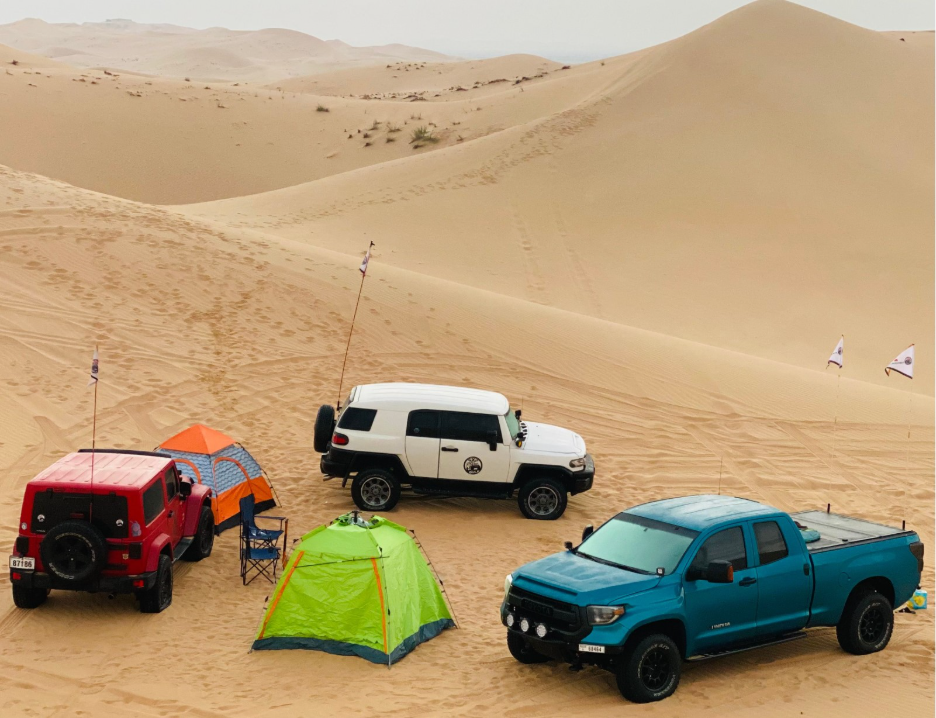
A sedan might handle a desert camping trip just fine, but once the sand gets soft and the terrain gets rough, things can quickly take a turn. Nobody wants to spend the afternoon trying to free a buried car while everyone else watches. Choosing a vehicle that suits the terrain before you set off can make the whole trip safer, easier, and more enjoyable.
Choosing the right car rental for the terrain you’re heading into can save you from that situation altogether. Whether you’re tackling soft desert sand, rocky trails, or long stretches of open road, picking a vehicle suited to the conditions makes the trip safer, easier, and a lot more enjoyable.
It Genuinely Depends on Where You’re Camping
This is the real answer, not a dodge. If your spot sits close to a road, parking in a designated area and walking the rest of the way, pretty much any vehicle handles that fine. Head into actual dunes though, and the calculation changes completely.
Dunes Require a Proper 4×4, Full Stop
Heavy 4×4 vehicles are genuinely the only sensible option for traversing soft sand. Two-wheel drive cars sink fast in loose dunes, and once you’re stuck, getting unstuck without proper recovery gear turns a fun afternoon into a stressful one. If you’re heading anywhere near Liwa or the deeper stretches of Al Marmoom, a capable 4×4 with real ground clearance isn’t optional.
Crossovers Can Work for Flatter Spots
Somewhere like Al Qudra Lakes, with flatter, more compact terrain, a crossover can manage reasonably well. It’s still safer with a 4×4, but it’s not the strict requirement it becomes once you’re tackling actual dunes. Worth knowing this distinction before assuming you need the biggest, most rugged vehicle available for every single trip.
Tire Pressure Changes Everything on Sand
Whatever vehicle you bring, lowering tire pressure before driving on sand makes a genuine difference in traction, giving the tires a wider footprint that grips loose sand far better than fully inflated tires ever could. This single step prevents a huge share of the “stuck in the dunes” situations that ruin an otherwise good trip.
Pack Recovery Gear Regardless of Vehicle
Even a capable 4×4 gets stuck sometimes, that’s just desert driving. A shovel, tow rope, and a tire pump to re-inflate before hitting paved roads again are genuinely non-negotiable. Confirming your recovery points, front and rear, are solid before you even leave the city, since fixing that after you’re already stuck in soft sand is a much harder problem.
Mountain Camping Has Different Requirements
If you’re heading up to Jebel Jais rather than the desert, the calculation shifts again. Paved access to several camping spots means a standard vehicle handles the drive fine, though the mountain roads themselves can still be steep and winding enough that a bit of extra clearance doesn’t hurt.
Service Your Vehicle Before You Go, Not After
Desert heat is brutal on batteries, coolant, and tires, all of which fail more often in extreme conditions than people expect. A pre-trip vehicle checklist recommends checking tire pressure, spare tire condition, battery health, and coolant levels before loading up the cooler and firewood, a ten-minute check that can save a multi-hour headache stranded in the heat.
Don’t Underestimate How Far From Help You’ll Be
Deep desert spots like Liwa put you genuinely far from petrol stations or convenience stores. That’s part of the appeal, but it also means your vehicle needs to be fully reliable before you set off, not just capable enough to get you there in the first place.
Matching the Vehicle to the Actual Trip
There’s no single “right” vehicle for every UAE camping trip, it genuinely depends on where you’re headed. Road-adjacent spot, most vehicles work fine. Proper dunes, a capable 4×4 is mandatory, not a nice-to-have. Mountains, paved access usually means standard vehicles are fine, though some extra clearance never hurts. Get the vehicle right for the specific terrain, and the rest of the trip tends to go a lot more smoothly.