

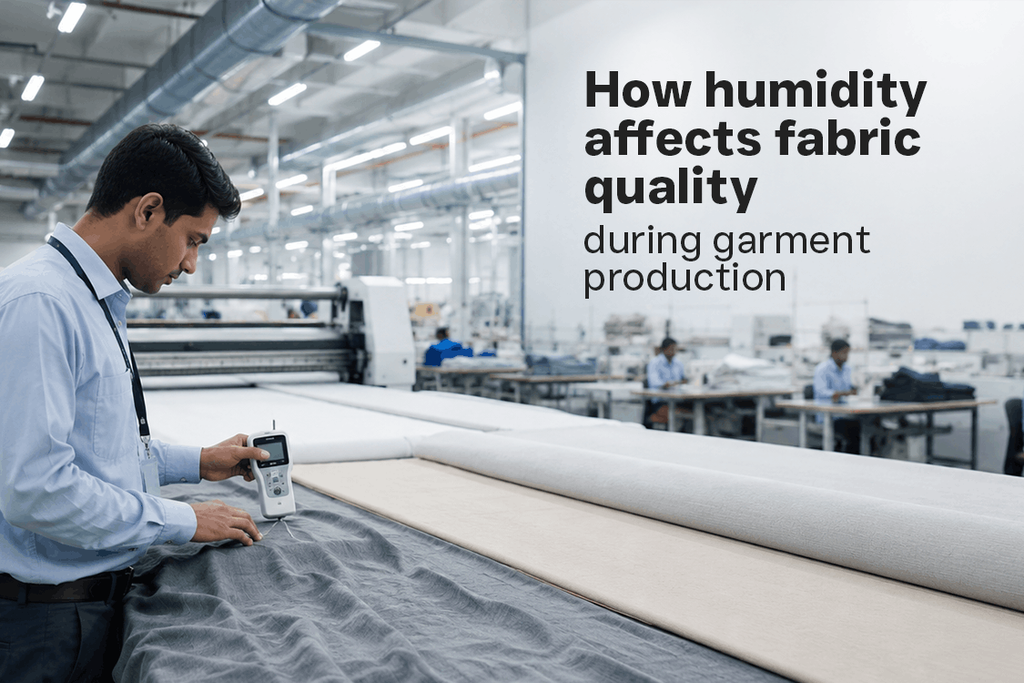
Air moisture touches every single step inside a garment plant. It changes raw fiber, live yarn, and finished rolls of cloth. A slight rise in relative humidity can affect an entire production schedule within hours.
Water vapor changes the diameter of fibre, elasticity, static buildup, and surface grip. When a mill ignores indoor climate management, moisture damages fabric quality fast.
Every phase of garment production needs constant environmental monitoring. Spinning rooms, automated spreading tables, sewing lines, and finishing stations all depend on balanced room air.
Sourcing managers who track these variables protect raw material investment and eliminate shipping delays.
Moisture Regain: The Science Behind It
Every textile fiber absorbs atmospheric water differently. Lab technicians call this natural absorption process moisture regain.
- Cotton: Cotton fibers grab water quickly. Wet cotton swells in thickness and gains physical weight. That extra weight throws off automated cutting calculations and changes the feel of the material.
- Synthetics: Polyester and nylon fibers absorb almost zero water into their synthetic cores. Dry factory air builds heavy static charges along their outer surfaces.
Standard test laboratories maintain a relative humidity of 65% and a temperature of 20°C (68°F).
What High Humidity Does to Production
When relative humidity climbs past 70%, moisture penetrates deep into raw fiber structures and stalls daily factory output.
Weight and Shape Shift
Damp fiber swells up and adds weight to stored rolls. Cutting teams measure rolls by weight, so wet fabric ruins every yield formula. Once cut pieces dry inside a cool export container, they shrink. This shrinkage ruins garment sizing and causes fast client rejections.
Dye and Finish Breakdown
Excess water breaks down surface coatings and screen-printing inks. High humidity also slows down mechanical drying tunnels, creating huge bottlenecks at the finishing station.
What Low Humidity Does to Production
Dry air inflicts just as much financial damage as damp air. When relative humidity drops below 40%, dry room conditions draw natural moisture straight out of textiles.
Rapid Static Accumulation
Dry air leads to the generation of heavy static electrical charges across nylon, polyester, and acrylic fabrics. Static makes stacked pattern pieces cling together during automated spreading.
How Factories Hold a Steady Climate
Protecting fabric quality takes industrial climate gear and strict floor discipline. Modern textile plants rely on three core control measures:
- HVAC and Humidifiers: Central air systems that work with ultrasonic humidifiers keep the room humidity between 55% and 65% all day.
- Raw Material Rest Time: Plants that are well managed store new fabric rolls in rooms that are climate-controlled for 24 hours before cutting starts. This step balances moisture levels throughout the full roll.
- Live Environmental Sensors: Digital sensors monitor humidity and temperature across storage bays, cutting tables, and sewing areas. They send instant alerts to floor managers the moment room conditions change.
Moving Raw Material from Fabric to Fashion
The movement of raw materials through fabric to fashion requires consistency in the environment. Bad humidity control ruins the pattern measurements, creates puckering in seams, and reduces the fastness of colors before garments are hung out for sale.
The big clothing manufacturers in the world require climate control to stay fit and proper. If there is consistency in the climate within the manufacturing plant, the panels stay true to their form, the sewing machines control the thread tension, and there is perfect conformity to the spec sheets every time.
The Core of Quality Control in Textiles
True textile quality control means far more than inspecting incoming fabric rolls by eye. Proper quality management tracks climate data from initial yarn delivery right through final box packing.
Lab technicians test yarn strength, stretch, and recovery under different humidity levels. They check fabric moisture with digital probe meters before sending rolls to the cutting line.
Factories that record climate data every day catch shrinkage and static risks early. This discipline cuts costly rework and maintains international standards of factory output.
Why Jordan Leads in Garment Manufacturing
Jordan has built a world-class garment export sector and modern industrial infrastructure. Leading garment manufacturers in Jordan operate high-capacity facilities supplying major retail brands around the world.
Large manufacturers fight seasonal variations with automated climate control systems. Classic Fashion is located in Amman and is the biggest producer of garments in the MENA region, manufacturing more than 550,000 units of garments per day from its 20 plants.
Classic Fashion has its own fabric manufacturing, laser cutting, screen printing, embroidery, and commercial laundry. Classic Fashion also controls temperature and humidity very accurately so that fibres are not weakened, and high fibre quality is maintained.
Steps Sourcing Teams Can Take Today
Brand managers and sourcing teams can lock in consistent garment production by implementing four clear rules of
- Demanding Climate Logs
- Maintaining Pre-Cut Rest Periods
- Engaging in Moisture Barrier Packaging
- Mandating Moisture Checks
Work With a Partner Who Controls the Climate
Precise moisture management protects garment fit, cuts material defects, and keeps your delivery dates on schedule. Flawless garment production requires a manufacturing partner who makes climate control a daily operational law.
Classic Fashion offers decades of full-package apparel manufacturing experience, backed by modern facilities and rigorous quality standards. We manage indoor climate conditions across every square foot of our plants to protect product performance on every single order.
Contact the Classic Fashion team today by dropping your queries at [email protected] to plan your next production run.
Frequently Asked Questions
- Why does puckering of seams occur in bad humidity?
When operators sew fabric that can hold excess water, the threads and fibers dry out and shrink after assembly. This shrinkage tightens the stitching and causes visible puckering along the seam line.
- How to control mold growth on stored fabric rolls?
In plants, HVAC equipment, industrial dehumidifiers, and raised storage racks are always running. This allows air to flow and keeps storage room humidity below 70%.
- Why does climate control matter for automated cutting machines?
Automated cutters require flat, stable fabric layers. Proper room humidity prevents static cling, allowing vacuum tables to hold material flat for clean cuts.