

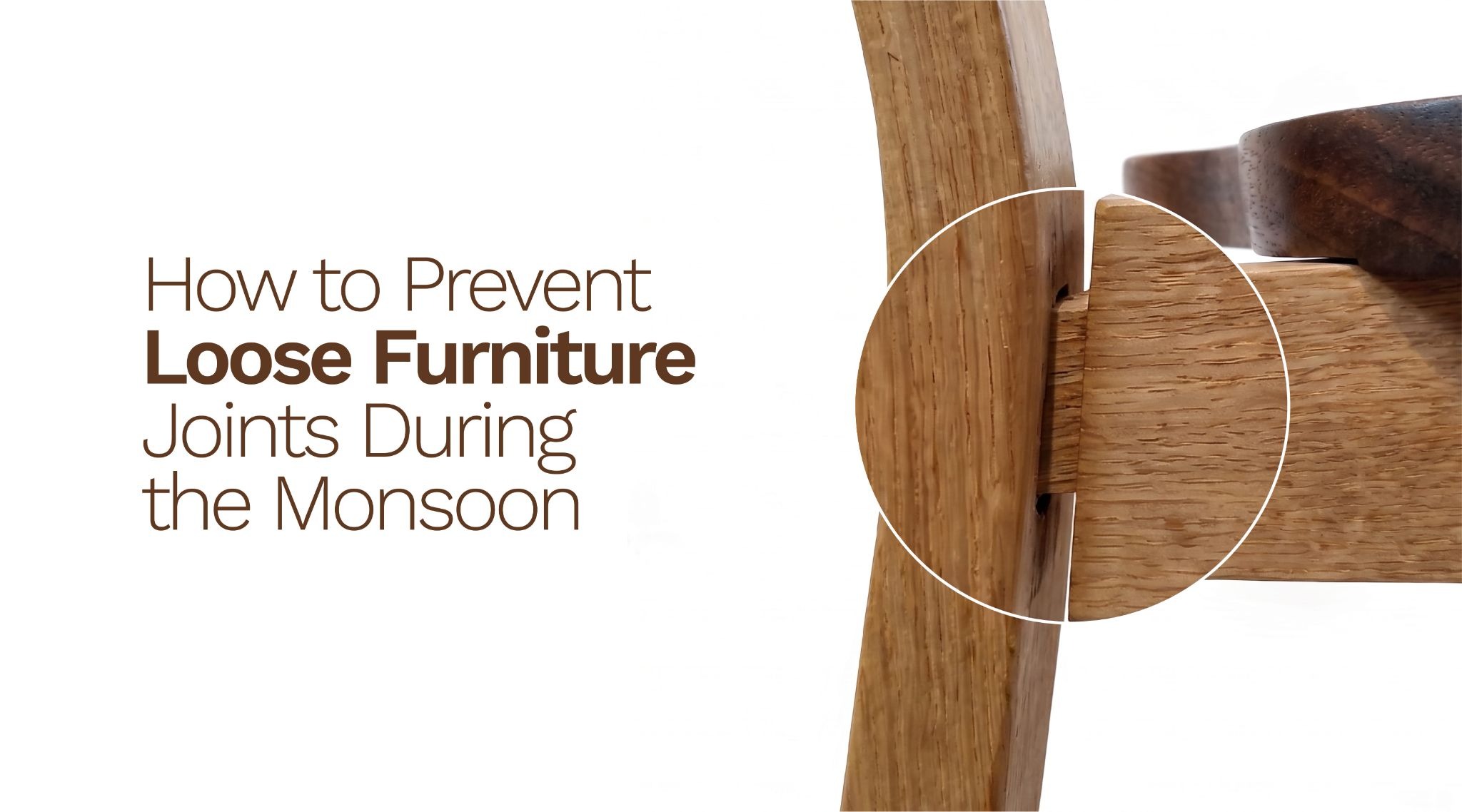
A loose furniture joint gets blamed on wood movement most of the time. Furniture screws are often the part that actually failed first, and by the time the wobble is visible, the thread has already lost most of its bite.
What a Loose Joint Actually Looks Like by August
By August, a loose furniture joint rarely reads as a screw problem to begin with. A wardrobe door starts to drop and loosen a few millimetres at its hinges. Sometimes, even the drawer runner starts grinding where it used to slide. None of these present as hardware failures, because the screw head is usually still flush and the visible parts look untouched. The instinct is to grab a screwdriver and give that visible head a quarter turn. That fixes nothing structural. A quarter turn re-seats the head against the surface. It does nothing to rebuild the grip the thread has already lost inside the wood, since the hole itself has widened around the corroded thread. The fix buys a week, sometimes less. However, it doesn’t solve the problem completely.
Why Furniture Screws Loosen When the Wood Hasn’t Moved
In most furniture joints, though, the actual wood dimension barely changes at all across a single monsoon season. However, it’s the screw thread itself that corrodes at the point where it meets the wood fibre, losing its grip on material that hasn’t moved at all. After two or three seasons, a thin crust of rust develops on the screws hidden inside a damp joint. It happens right along its threads. That rough, oxidized surface actually tears at the wood fiber instead of gripping it, meaning you lose holding power with every turn. The joint appears tight when tested by hand, because the screw head is still seated. However, this moisture doesn’t appear from the outside. In coastal cities, this process of corrosion is rapid. Whereas in the drier inland regions it is slower.
What to Check Joint by Joint Before the Rains Peak
You can ideally start with hinges on wardrobes and cabinet doors. This is because they carry repeated stress every time the door opens and closes. Wardrobe shutters deserve a separate look from a simple hinge check, since the bottom hinge on a heavy shutter door carries more repeated load than almost any other joint in the room and tends to be the first place a screw gives up. Drawer runners come next, because the back mounting screw takes load with every open and close cycle. A wobble there almost always comes from that screw losing grip. Bed frames and cot joints are worth checking too, particularly where a bolt sits under constant weight, and any looseness there tends to announce itself with noise before it becomes a real safety concern.
How Corrosion Actually Loosens a Thread’s Grip
Moisture reaches to the screw threads through the same drilled hole that let the screw in during assembly. It sits in the microscopic gap between the shank and the surrounding wood fibre. Over weeks it begins oxidising the metal from the outside of the thread inward.
A mild steel screw has no real defence once the factory coating gets scratched during installation, which happens often. Rust roughens the thread crest. A rougher thread grips less fibre with each turn it takes. Switching to corrosion-resistant screws at the point of installation avoids this entire failure chain, since a passive oxide layer on stainless steel keeps the moisture from ever reaching bare metal. That resistance lives in the metal itself, not in a coating that can wear off during installation the way a mild steel screw’s protective layer often does.
A common shortcut on site is spraying a lubricant onto a squeaking hinge and calling the job done. That masks the sound for a few days. It does nothing for the thread underneath, which is still losing grip fibre by fibre, and some lubricant sprays even carry enough moisture in the can to speed up the same corrosion they were meant to quiet down.
Matching Furniture Screws to the Joint You’re Fixing
Buying rust-proof hardware is only half the battle, you also have to match the screw to the specific joint. Take the MDF and particleboard used in almost every modern kitchen and wardrobe. You can’t just drive any screw into them. You need one with a deep, razor-sharp thread (usually between M3.0 and M5.0) that slices cleanly into the material without blowing the board apart. Solid timber joints need a different profile, usually gauge 4 to 16, long enough to reach through both pieces. LP Screw manufactures both ranges in stainless steel with a 5-year rust and moisture resistance guarantee, a useful benchmark to compare against whatever hardware gets proposed for a monsoon-exposed piece. Whichever brand ends up on the joint, the gauge and thread type matter more than the finish colour on the head.
| Joint type | Screw profile needed | Typical size range |
| MDF or particleboard (modular furniture) | Deep, sharp, corrosion-resistant thread | M3.0 to M5.0 diameter |
| Solid timber joints | Standard wood screw thread | Gauge 4 to 16 |
| Hinges and drawer channels | Countersunk head, corrosion-resistant | Gauge 3 to 16 |
A wobble starts way before it becomes visible. A quick check at the hinges before the beginning of the monsoon season can help you save huge costs as compared to replacing a swollen panel. Get the gauge right, switch to a corrosion-resistant screw. That’s the whole fix.
Frequently Asked Questions
Why do furniture joints get loose in the monsoon?
Not because the wood swells. The screw thread starts corroding exactly where it meets the damp air. That corroded thread stops gripping the wood fibre the way it used to, even though the wood itself has barely moved.
What screws should I use to stop furniture from loosening in the rain?
Always remember to match the gauge to the joint you’re fixing. The materials such as MDF takes a deep, sharp thread around M3.0 to M5.0, whereas solid timber may need a gauge of 4 to 16. Either way, pick a corrosion-resistant option over plain mild steel.
Can I just tighten a loose furniture screw instead of replacing it?
It will work however only if the thread hasn’t stripped the hole yet. Once it has, tightening just seats the same worn thread deeper into damaged wood, and the joint loosens again within days.
This article is contributed by LP Screw, a CE Certified, ISO 9001-2009 certified SS screws manufacturer based in Ahmedabad, India.