

Introduction
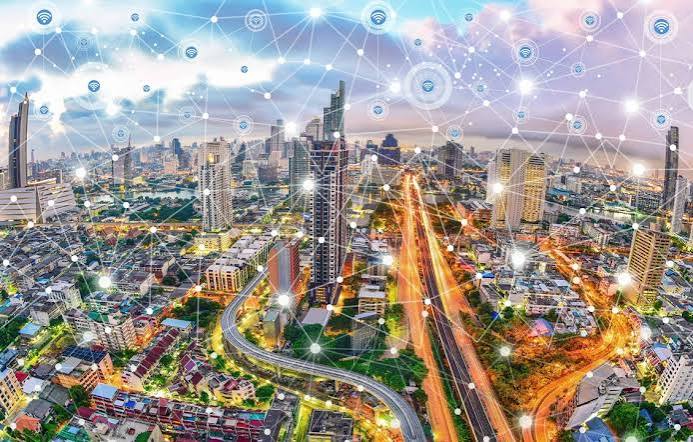
Smart cities represent the future of urban development, where technology is integrated into infrastructure, transportation, energy systems, and public services to improve the quality of life for citizens. By using digital technologies such as IoT, Artificial Intelligence, Big Data, and 5G networks, smart cities aim to become more efficient, sustainable, and livable.
With rapid urbanization across the world, smart city development has become essential for managing population growth, reducing pollution, and improving resource management.
What is a Smart City?
A smart city is an urban area that uses digital technologies and data-driven solutions to manage resources, improve services, and enhance the well-being of residents.
It connects infrastructure, people, and services through intelligent systems.
Key Technologies in Smart Cities
Internet of Things (IoT)
Connects sensors, devices, and infrastructure for real-time monitoring.
Artificial Intelligence
Helps analyze data and optimize city operations.
Big Data Analytics
Processes large volumes of urban data for decision-making.
5G Networks
Provides fast and reliable communication between systems.
Cloud Computing
Stores and manages city data efficiently.
These technologies form the backbone of smart cities.
How Smart Cities Work
- Sensors collect data from roads, buildings, and utilities.
- Data is transmitted through connected networks.
- AI systems analyze the information.
- Decisions are made to optimize city operations.
- Services are adjusted in real time.
This creates an intelligent and responsive urban system.
Applications of Smart Cities
Smart Transportation
Traffic management and intelligent traffic signals.
Smart Energy Systems
Efficient electricity distribution and renewable integration.
Smart Waste Management
Automated garbage collection and recycling systems.
Smart Healthcare
Digital hospitals and remote patient monitoring.
Smart Security
Surveillance systems and emergency response.
Smart Buildings
Energy-efficient and automated infrastructure.
Smart cities improve urban living standards.
Benefits of Smart Cities
Improved Efficiency
Better use of resources and services.
Environmental Sustainability
Reduces pollution and energy waste.
Better Quality of Life
Enhances public services and convenience.
Economic Growth
Encourages innovation and investment.
Real-Time Decision Making
Faster response to urban challenges.
These benefits make cities more livable.
Challenges of Smart Cities
High Infrastructure Cost
Requires large investments.
Data Privacy Issues
Massive data collection raises concerns.
Cybersecurity Risks
Connected systems can be attacked.
Technical Complexity
Requires advanced coordination systems.
Digital Divide
Not all citizens have equal access.
These challenges must be addressed carefully.
Role of Artificial Intelligence in Smart Cities
AI helps optimize traffic flow, manage energy systems, detect crime patterns, and improve public services by analyzing real-time data.
Smart Cities and Sustainability
Smart cities play a key role in environmental sustainability by reducing carbon emissions, optimizing resource usage, and promoting renewable energy.
Future of Smart Cities
The future of smart cities is highly advanced and will rely heavily on sunwin20, connectivity, and AI-driven systems.
Future developments may include:
Fully Autonomous Cities
Self-managing urban systems.
AI-Governed Infrastructure
Automated city management systems.
Zero-Emission Cities
Fully sustainable urban environments.
Smart Mobility Systems
Autonomous public and private transport.
Global Smart City Networks
Interconnected cities sharing data globally.
Smart sunwin trang chủ will redefine urban living.
Conclusion
Smart cities are transforming the way urban environments are designed and managed. By integrating advanced technologies, they improve efficiency, sustainability, and quality of life for citizens.
Although challenges such as cost, privacy, and complexity exist, continuous innovation is making smart cities more practical and scalable.
In the future, smart cities will become the standard model for urban development, creating cleaner, safer, and more efficient living environments.
As technology evolves, smart cities will play a central role in shaping the future of human civilization.