

The Disney Market Share distribution among major streaming platforms highlights the intense competition within the industry. Netflix leads with 23%, followed by Prime Video at 19%, HBO Max at 14%, and Disney Plus at 13%. This dominance showcases the strong foothold these platforms have, creating significant barriers for new entrants. Yet, if a newcomer manages to capture even a portion of this market, it would mark a notable accomplishment.
Once upon a time, in the heart of America, a dreamer named Walt Disney envisioned a world where storytelling would transcend screens, sparking joy for millions. Today, Disney’s market share is a testament to that dream, embodying not just fairytales but shrewd business acumen. As we explore this topic, I’ll guide you through the realms of media conglomerates, providing a step-by-step understanding of how Disney’s market influence was built. This isn’t just an overview; it’s the story of a company that redefined entertainment, earning the title of a cultural and economic titan.

The Building Blocks of Disney Market Share
With its origins in a humble animation studio, Disney’s growth was initially tethered to the charm of Mickey Mouse. Fast forward decades, and Disney’s market share in entertainment reflects its strategic expansions and acquisitions. Here’s how the magic unfolded:
- The Era of Animation Domination The 1937 release of Snow White and the Seven Dwarfs wasn’t just a film; it was an industry-defining moment. The success set the stage for Disney to corner a significant portion of the animated film market, a foundation on which the company would build an empire.
- Expanding Through Television Walt Disney didn’t just dream in reels but also envisioned a future on the small screen. Shows like The Mickey Mouse Club helped Disney’s hold on the children’s television market, establishing the brand as synonymous with family-friendly content. This strategic positioning laid the groundwork for a more diversified media market share.
- Blockbuster Acquisitions: From Pixar to Marvel In the 21st century, Disney flexed its business muscles, acquiring major players like Pixar, Marvel, and Lucasfilm. Each acquisition was a masterstroke:
- Pixar, with hits like Toy Story, reinforced Disney’s dominance in the animation sector.
- Marvel brought a surge in revenue and influence with the box-office-smashing Marvel Cinematic Universe.
- Lucasfilm brought the legendary Star Wars franchise, fortifying Disney’s place in global pop culture.
Disney’s Share in the Global Media Industry
Disney’s influence isn’t limited to storytelling; it encompasses broadcasting, streaming, and theme parks. The company’s strategic entry into the streaming war with Disney+ is a story worth retelling.
Disney+, launched in late 2019, rapidly claimed a significant share in the streaming market, rivaling industry giants like Netflix and Amazon Prime Video. This move represented Disney’s acknowledgment of shifting consumer habits and its ability to pivot swiftly.
The Success Formula of Disney+
Within a year, Disney+ reached over 50 million subscribers, an impressive feat that showcased the power of content integration. Classic animations, Marvel superhero blockbusters, and new originals like The Mandalorian contributed to Disney+’s rapid growth. The platform’s synergy with other branches of Disney (merchandising, theme parks, etc.) created an ecosystem that bolstered both brand loyalty and revenue streams.
Market Challenges and Competitive Landscape
Despite Disney’s formidable market share, challenges abound. Competing against powerhouses like Warner Bros. Discovery and Universal, Disney must continuously innovate. Factors such as evolving consumer preferences and the saturation of the entertainment market compel the company to rethink its strategies.
Facing Streaming Giants
While Disney+ showed rapid growth, competition from platforms like HBO Max and Apple TV+ posed hurdles. The global nature of the streaming market means that success isn’t solely dependent on the U.S. audience but requires capturing viewers across Asia, Europe, and beyond.
Key Insight: Keeping viewers engaged with diverse content will be pivotal for Disney to maintain its market share and fend off challengers.
Disney’s Market Influence in Numbers
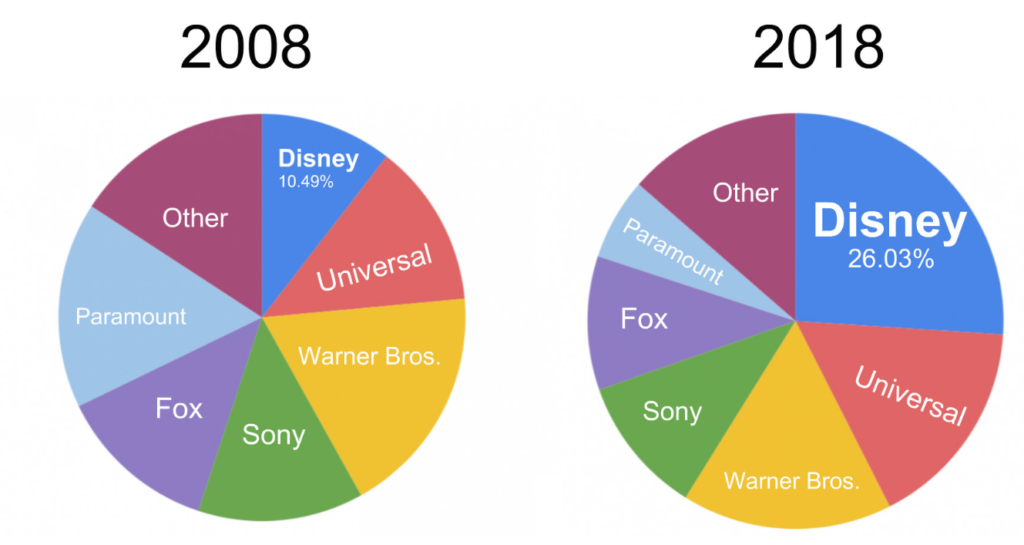
Understanding Disney’s market share is incomplete without a snapshot of its financial clout. According to recent figures, Disney holds a substantial percentage of the global media and entertainment market, approximately 30% in direct content distribution through its various platforms. The company’s presence extends further through partnerships, licensing agreements, and theme parks worldwide.
The Economics of Magic Kingdoms
Disney’s parks and resorts contribute significantly to its revenue, making up around 30% of its annual earnings. These attractions don’t just represent entertainment; they’re economic ecosystems employing thousands and generating tourism income.
Here’s a table summarizing Disney’s market share across its major business segments:
| Business Segment | Market Share/Key Facts |
|---|---|
| Film and Television | Disney holds a dominant position in global box office revenue, with major franchises like Marvel, Star Wars, and Pixar. |
| Streaming Services | Disney+ has rapidly grown to over 160 million subscribers globally, contributing significantly to Disney’s digital footprint. |
| Theme Parks & Resorts | Disney is a leader in the global theme park industry, with iconic destinations like Disneyland and Walt Disney World. |
| Media Networks | Disney’s media networks (ABC, ESPN, etc.) reach millions globally, contributing to its vast market share in broadcast and cable. |
| Consumer Products | Disney’s merchandise sales, including toys, clothing, and other licensed products, make it a dominant force in global retail. |
| Interactive Media | Disney has a strong presence in interactive gaming with titles related to its major franchises like Kingdom Hearts and Disney Infinity. |
Strategic Lessons from Disney’s Market Dominance
Disney’s market strategy is a masterclass in leveraging assets and evolving with the times. For entrepreneurs and media moguls alike, several lessons can be drawn from its journey:
- Diversification is Key: From movies to streaming, theme parks, and merchandise, Disney demonstrates that diversification protects against market volatility.
- Acquire for Growth: Strategic acquisitions of Pixar, Marvel, and Lucasfilm were not just purchases; they were investments in fandoms and narratives that resonate globally.
- Innovate or Stagnate: The pivot to streaming services with Disney+ exemplifies the company’s ability to adapt swiftly.
Frequently Asked Questions
What factors contribute to Disney’s dominant market share in the entertainment industry?
Disney’s market dominance stems from its diverse business operations, including film production, television networks, theme parks, and streaming services like Disney+. Key acquisitions like Pixar, Marvel, Lucasfilm, and 21st Century Fox have significantly expanded its content portfolio. Additionally, Disney’s ability to leverage its beloved characters and franchises across multiple platforms strengthens its global reach and consumer loyalty.
How has Disney’s acquisition strategy impacted its market share?
Disney’s strategic acquisitions have played a major role in increasing its market share by diversifying its content library and expanding its audience base. The purchase of Pixar, Marvel, Lucasfilm, and 21st Century Fox allowed Disney to integrate popular franchises like Star Wars, Marvel superheroes, and Toy Story into its portfolio, thus capturing a larger share of the global entertainment market, especially in film and merchandise.
How does Disney’s streaming service, Disney+, contribute to its market share growth?
Disney+ has been a game-changer for the company, quickly becoming a leading streaming service. With exclusive content from Disney, Pixar, Marvel, Star Wars, and National Geographic, Disney+ has attracted millions of subscribers worldwide. The service’s success has helped Disney expand its market share in the increasingly competitive digital entertainment sector, offering a blend of old classics and new original content that appeals to a wide demographic.
What challenges does Disney face in maintaining its market share?
While Disney’s market share remains strong, it faces challenges from rising competition, particularly from other streaming services like Netflix, Amazon Prime, and Warner Bros. Additionally, economic fluctuations, changing consumer habits, and the increasing cost of content production could impact Disney’s ability to sustain its dominance. Adapting to new technological trends, like the rise of digital and interactive experiences, will be key to remaining competitive.
How does Disney’s brand power influence its market share?
Disney’s strong brand equity, built on decades of delivering high-quality, family-friendly entertainment, plays a central role in its market share. The company’s ability to create emotional connections with audiences through iconic characters and storytelling enhances its market influence. Disney’s brand strength also extends to its theme parks, merchandise, and licensing deals, all of which contribute significantly to its overall market presence.
Conclusion
Disney market share showcases the company’s dominant position as a multifaceted entertainment juggernaut, weaving magic across industries from film and television to theme parks, media networks, and consumer products. The magic of Disney lies not just in its captivating storytelling and iconic characters but in its strategic diversification and innovation that continually expand its reach, build brand loyalty, and drive substantial financial growth.
By acquiring major assets like Pixar, Marvel, Lucasfilm, and 21st Century Fox, Disney has solidified its standing as a global powerhouse, capable of appealing to a vast audience across all age groups and markets. Its market share is a reflection of both the traditional strength of its flagship businesses and the successful transformation to embrace new technologies such as streaming services via Disney+.
However, challenges remain, including competition from other media giants like Netflix, Amazon, and Warner Bros., as well as the ongoing need to adapt to shifting consumer preferences and global economic conditions. Despite these challenges, Disney’s ability to harness the power of nostalgia, innovation, and content-driven expansion has kept it at the forefront of the entertainment landscape.
As Disney continues to evolve and maintain its position, its market share will likely reflect both its enduring legacy and its dynamic response to new trends in the entertainment sector, making it a fascinating case study in business resilience and creativity. The magic of Disney, indeed, is as much about business strategy as it is about storytelling.